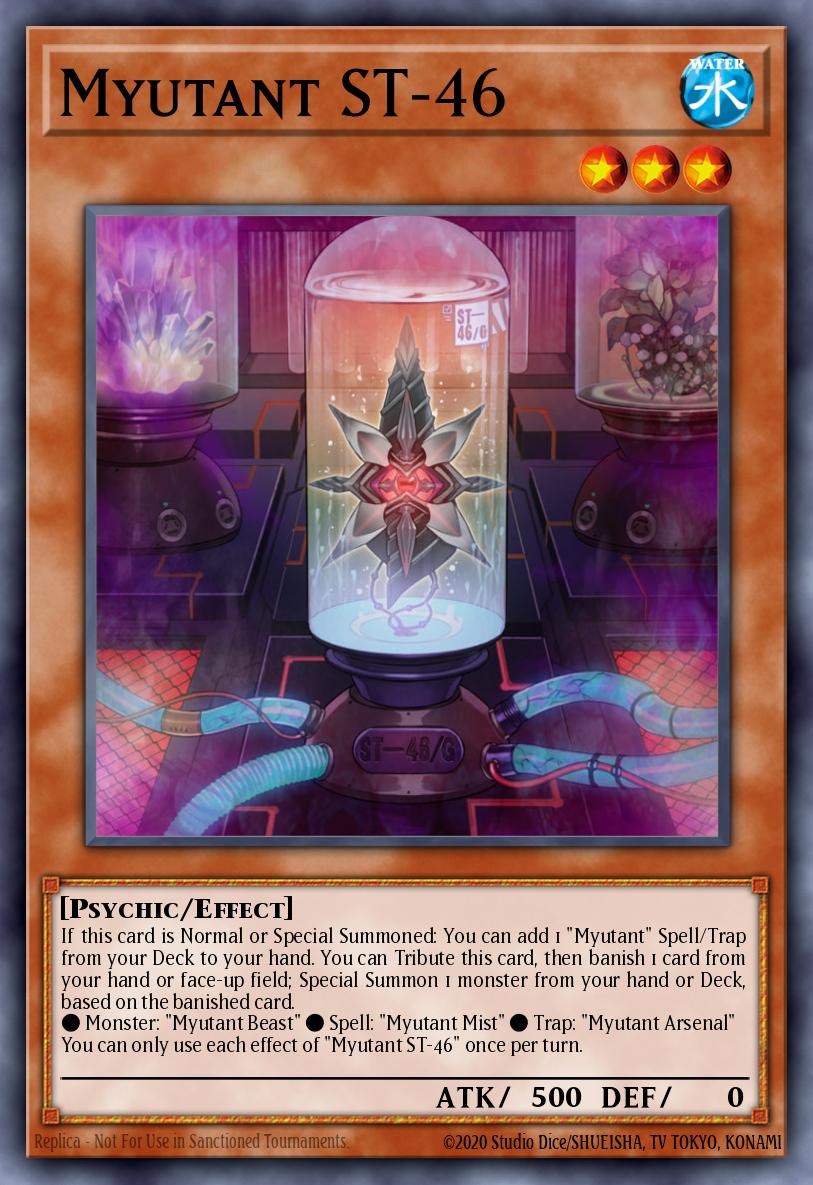

1. Plan two resources before changing forms
Myutant Mutation introduces the small subjects in a lab, where they can evolve into different monsters. In practice, work out which card you will banish to choose the form. Then make sure you have a separate card available to pay for the evolved monster’s effect.
2. Search with the subject that fills your hand’s gap
On summon, Myutant M-05 finds a different Myutant monster. Myutant ST-46 finds a Myutant Spell or Trap. Either can Tribute itself and banish a card from hand or face-up field to summon a form from hand or Deck. Use the search first to find a Type you can spend or a card you need later.
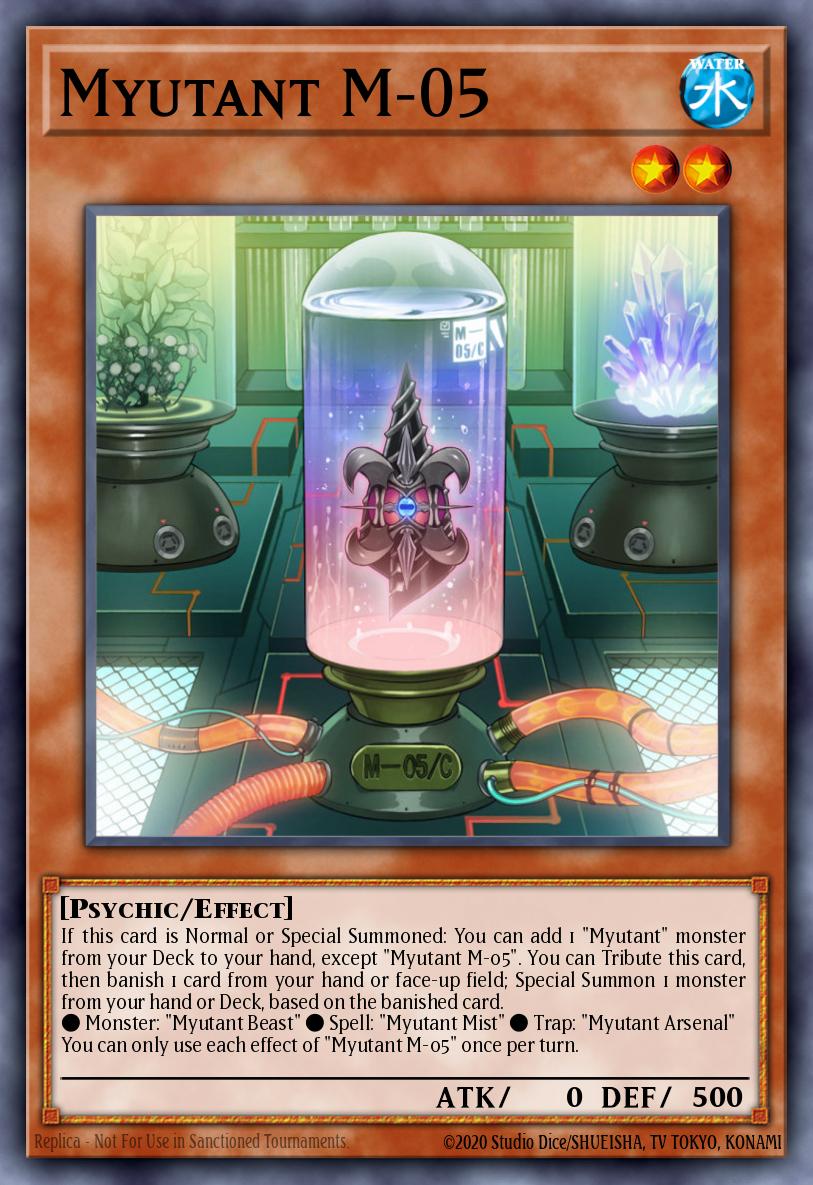
3. Match the card Type and the available form
The banished card’s Type determines the transformation. Think about which opposing activation you want to answer and which Type you can spare. Check whether the needed form remains in hand or Deck. If it is gone, choose another legal form or keep the subject for a later turn.
| Banish | Summon | Response |
|---|---|---|
| Monster | Beast | Negate an opposing Spell activation or effect. |
| Spell | Mist | Draw two in response to an opposing Trap activation or effect. |
| Trap | Arsenal | Banish a target monster in response to an opposing monster effect. |
4. Keep a second banish for Beast’s response
Myutant Beast needs to banish another card from hand or field in response to an opposing Spell card or effect. If it negates that activation successfully, it banishes the Spell. With one card left after summoning Beast, decide if the first Spell is worth spending your last resource.
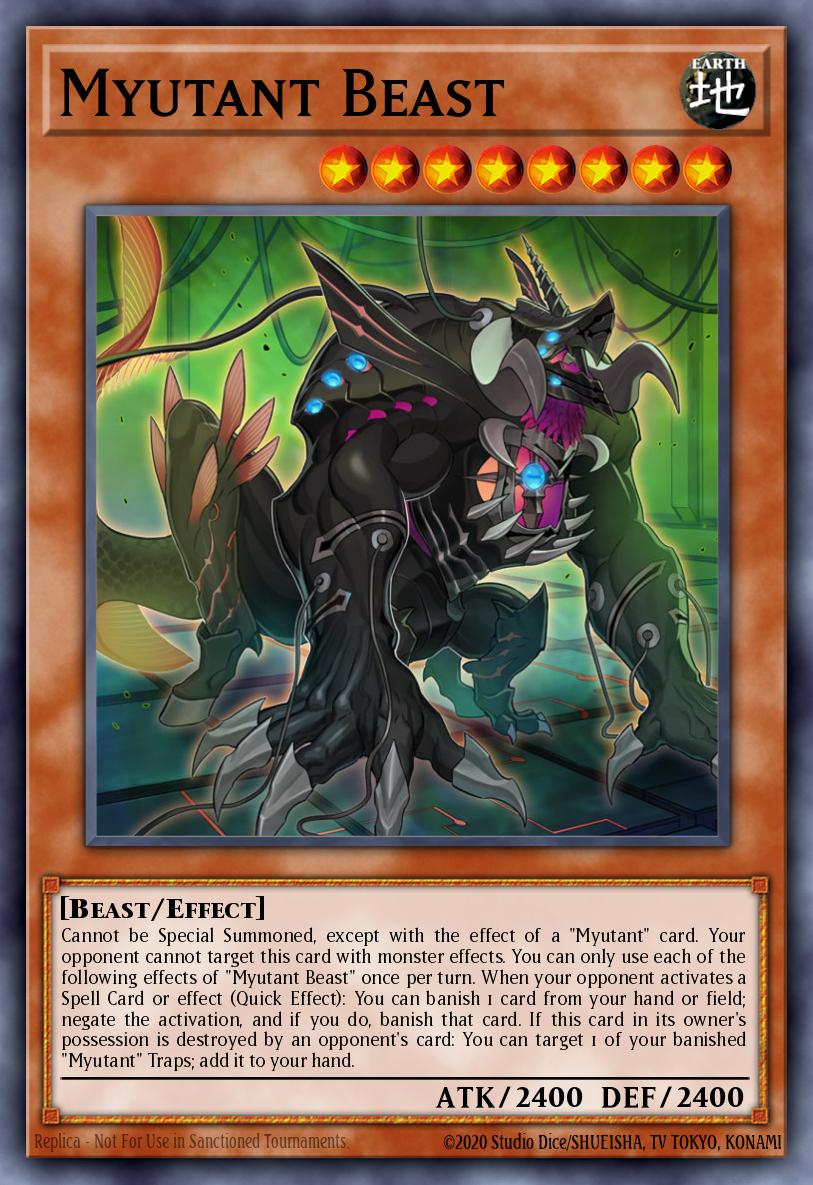
5. Test what each evolution can answer
Try banishing a monster, then use a legal ST-46 line that banishes a Spell or Trap. For each result, record the remaining cost and what it can answer. Count opposing Spells separately from Beast’s once-per-turn response. If the opponent destroys the evolved monster by card effect, read which banished card its recovery can return.