Three legal copies still follow Fuwalos's own limits
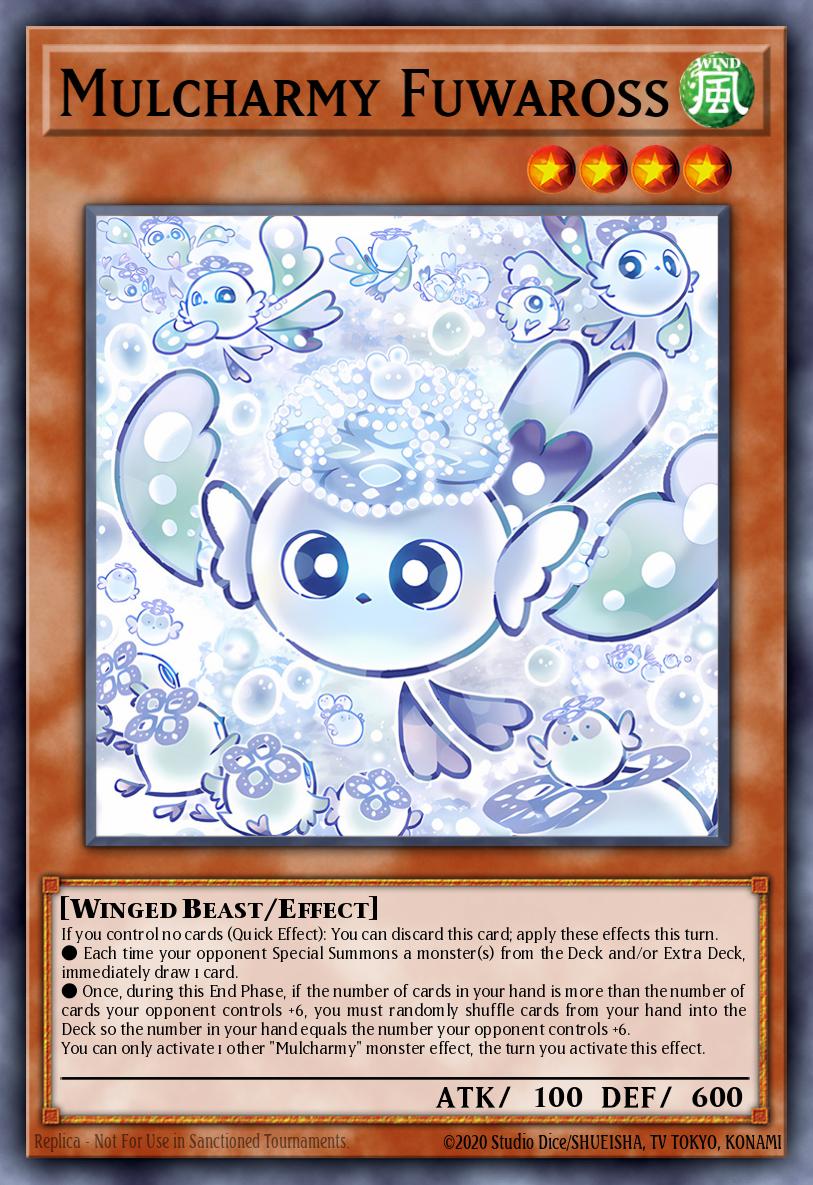
Mulcharmy Fuwalos was unrestricted in the Master Duel Ranked snapshot of November 13, 2026, so up to three copies fit under that regulation. Drawing more than one does not mean you have that many immediate responses. The card's own field condition and turn limits still decide which activation you can use.
| Field | Value |
|---|---|
| Rarity | UR |
| Ranked status | Unlimited, up to 3 |
| Draw source | Opponent’s Deck or Extra Deck |
Use Fuwalos before you put a card on your field
You can discard Fuwalos for its Quick Effect while you control no cards. A Set Spell or Trap counts as a card you control, even when your Monster Zones are empty. If you want the draw effect active for the rest of the turn, remember that the window can close as soon as you put another card on your field.
Count one draw per summon event from the relevant zones
After Fuwalos resolves, a Special Summon from the Deck gives one draw and a later Xyz Summon from the Extra Deck gives another. A summon only from the hand or GY adds no draw. If several monsters come out together in one qualifying event, count it once. Read the source of each summon rather than applying the same count you would for Maxx C.
Count the hand you will keep after the End Phase
In the End Phase, compare your hand with the number of cards the opponent controls plus six. If they control two cards and you hold ten, the target is eight, so two random cards go back to the Deck. Check the restriction on activating other Mulcharmy effects that turn as well. Judge the response by what remains after the adjustment, especially against a Deck that can end on very few cards.