DuelIndex · Deck Strategy Lab
Uncover the Strategy Behind Every Deck
Validated decklists analyzed for game plan, ratios, combos, choke points, going first/second, counterplay, and realistic match scenarios.
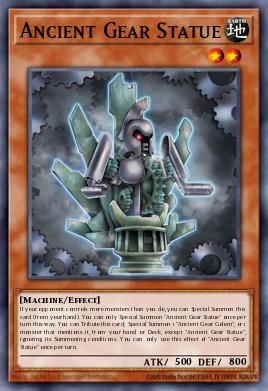
Ancient Gear Pure Midrange: Deployment and Fusion
This list uses Statue/Wyvern/Advance to reach Dark Golem and support pieces, converts Geartown/Fortress into resources, then Fusions. Droplet/Eclipse help going second; Howitzer and Workshop support follow-up. Lines depend on hand and board, not an assumed guaranteed OTK.
Ancient Gear Competitive Midrange — 41/15 deck analysis
41 Main, 15 Extra, no Side. Statue/Wyvern/Advance provide access; Dark Golem converts summons into search advantage; Catapult–Geartown, Hunting Hound and Ancient Gear Fusion build Machine Fusions. Ash/Impermanence/Droplet cover disruption and going second. Analysis of the provided list, not confirmation of current legality/banlist.

Ancient Gear Budget Midrange — Deck-Specific Analysis
Search for engine pieces, destroy Geartown to summon the original Golem, and convert materials into battle-focused Fusions. Howitzer supplies recovery after interruption. No claim is made about current legality, banlists, or metagame.

Sky Striker Pure Midrange — resource-driven control
This list accesses Ace Links with Raye/Engage, loads Spells via Hayate, retrieves through Kagari, searches via Shizuku, and trades Widow Anchor plus hand traps for resources. Three copies of Kagari/Shizuku/Hayate provide multi-turn depth, not permission to bypass each name’s per-turn summon restriction.
Sky Striker Budget Midrange — 40/15 deck analysis
The list has 40 Main, 15 Extra and no Side. Three Raye and three Shizuku anchor the engine; two Engage, two Kagari, two Widow Anchor and one Multirole sustain resources. Three GY Spells is an enhancement threshold, not a requirement for all effects. Desires risks banishing singletons. No claim about current banlist legality.


Gladiator Beast – Domain Combo: 22-card deck analysis
The 13 Gladiator Beast monsters in the Main Deck meet the Skill’s eight-monster threshold. The core plan is to set Gladiator Rejection through the Skill, activate it on a later legal turn, convert Test Tiger into a Deck tag, then combine Bestiari with another Gladiator Beast for Gyzarus. Without active Rejection, the shorter line depends more heavily on the Battle Phase; preserving resources for the next turn is better than claiming an unsupported end board.
Gladiator Beast Domain Combo — Tactical Breakdown
An 18-monster, 7-Spell/Trap build using battle tags, Skill-enabled access to Gladiator Rejection, and contact Fusions. Opening bodies and set Traps bridge the gap before combat; Gyzarus converts two on-field materials into removal. The Skill is once per Duel and setting Rejection is not immediate activation.
Gladiator Beast Domain Combo — 24-card deck analysis
This exact 24/7/0 build leverages the Skill to set Gladiator Rejection, Test Tiger to tag proactively, Gyzarus to destroy up to two cards, and Domitianus or Heraklinos as conditional payoffs. Lines depend on the hand, legal targets and activation windows.

Dragunity Pure Midrange — 40-card deck analysis
This 40/15/0 deck uses Remus–Ravine and Senatus to turn equipped Tuners into Synchro lines, with Whirlwind as a conditional going-second tool.
Dragunity Competitive Midrange — 42/15 deck analysis
This 42-card list uses three Remus and three Dragon Ravine to access resources, while three Senatus and three Couse turn equipped Tuners into Synchros. Going first it aims for Areadbhair or Crystal Wing; going second it uses Ascalon and available disruption. Lines are conditional examples, not guaranteed end boards.
Dragunity Budget Midrange — 40/15 Deck Analysis
This 40-card Main and 15-card Extra Deck uses Dragon Ravine, Senatus and Tuners that Special Summon themselves from Equip status to build Dragon Synchros. Three Remus access Ravine; three Legatus extend when Ravine or a Dragunity is present. A safe route ends on Crystal Wing, while Whirlwind offers an opponent-only-board route going second. Search, Normal Summon and discard are key pressure points.
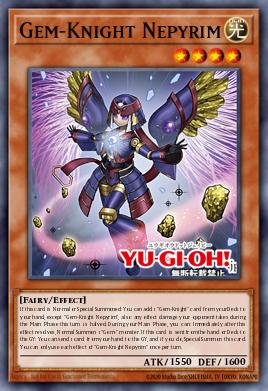
Pure Gem-Knight Midrange — 40/15 deck analysis
40 Main, 15 Extra, 0 Side. Three each of Nepyrim/Hollowcore/Quartz/Gem-Armadillo access the engine; Fusion/Absorb Fusion/Dispersion are also three each. Multiple Fusion routes coexist with no hand traps or Side cards; preserve graveyard resources for Hollowcore and Fusion recursion. No claim about the current Master Duel banlist.

Gem-Knight Midrange Fusion — 43/15 deck analysis
The submitted list has 43 Main, 15 Extra and no Side. Three each of Gem-Armadillo, Absorb Fusion and Gem-Knight Fusion anchor material access, while Lazuli and Obsidian refund resources. Brilliant Fusion is a one-of; Rescue Rabbit has exactly two Lapis as a same-name pair while both stay in Deck. Gem-Knight-only locks can rule out Rank 4 plays that turn.
Gem-Knight Budget Fusion Midrange — 40/15 deck analysis
Exactly 40 Main, 15 Extra, 0 Side. Ratios mirror the supplied decklist; analysis relies on the provided card text, not current banlist verification.

Utopia Onomat Midrange — 40/15 deck analysis
A 40-card Main Deck, 15-card Extra Deck and no Side Deck. The triple Onomat core, Ascended Sage and Astraltopia support Rank 4 Xyz plays. Utopiforce upgrades Utopia to Dragonar. A separate line makes two non-Number Xyz for Draco Future, while situational Rank 4s provide defense. Single-copy ZW cards help established Utopia boards but can clog an early hand. Current legality and banlist status are not asserted.
Budget Utopia Onomat Midrange Analysis
This 40-card list uses 3 Utopic Onomatopoeia, 3 Onomatopaira and 3 Onomatopickup to assemble Level 4 bodies; 2 Ascended Sage connect to Utopiforce–Dragonar. The F0 branch needs two same-Rank non-Number Xyz: Number 39 cannot be used directly.

Pure @Ignister Midrange: Link Control and Resource Management
Three each of Achichi, Pikari, A.I. Meet You and Cynet Mining access starters. Dark Infant finds the Field Spell, Doyon recycles cards, and resources convert into Dark Templar, Arrival or Accesscode. The 2 A.I.Land / 1 Contact package is conditional; Earth Golem lacks a Fusion spell in this list.
@Ignister Mathmech Midrange: 42-Card Deck Analysis
42 Main / 15 Extra / 0 Side. Triple Achichi and Pikari, triple A.I. Meet You and triple Cynet Mining boost access. Mathmech adds an independent Level 4 route; choose Arrival, Heatsoul or Accesscode based on resources and interaction. Current banlist legality is not asserted.
@Ignister Budget Midrange Analysis
The list uses three each of Achichi, Pikari and A.I. Meet You to access its engine, two Dark Infant to find A.I.Land, then chooses Templar, Rank-4 or Link pressure. Arrival is a conditional route, not an automatic result.

Ice Barrier Pure Midrange — exact-list analysis
Three each of Revealer, Speaker, Mirror Mage and Medallion form a WATER Synchro midrange core: prioritize Lancea, then convert interaction and recurrence according to available resources. This analyzes the submitted list without asserting a current banlist or metagame.
Ice Barrier WATER Synchro Midrange — 40/15 deck analysis
Exactly 40 Main, 15 Extra, no Side. Revealer and Medallion access Tuners, Ran provides an independent Level 10 Synchro route, and Lancea plus hand traps maintain tempo. Link/Xyz routes are unavailable after Mirror Mage’s WATER Synchro-only Extra Deck restriction; no combo is assumed without materials.
Ice Barrier Budget Midrange — Deck-Specific Analysis
This 40-card list uses 3 Revealer, 3 Mirror Mage, and 3 Medallion for Tuner access, plus 2 Ran for an independent Level 10 WATER Synchro line. Two Lancea turn opposing Special Summons into Ice Barrier bodies. Hand traps and Quick-Play interaction support going second. Legality under the current Forbidden/Limited List is not asserted.

Salamangreat Pure Grind: Wolf and resource loops
This 41-card list uses Gazelle for GY setup, Balelynx for Sanctuary, Sunlight Wolf for recursion and Roar/Rage for interaction. Raging/Pyro Phoenix are conditional payoffs, not automatic outcomes.

Salamangreat Raging Phoenix Grind — exact 41/15 analysis
This 41-card Main / 15-card Extra build uses Balelynx to find Sanctuary, Gazelle to stock the GY, Sunlight Wolf to recover resources, and two Raging Phoenix copies to find Roar/Rage and recur when a face-up FIRE monster is destroyed. The Accesscode route works only without a conflicting FIRE lock. This is a deck-structure analysis, not a claim of current banlist legality.
Salamangreat Budget Grind — 40/13 Deck Analysis
This exact 40-card Main and 13-card Extra uses Gazelle to load the GY, Balelynx to find Sanctuary, and Sunlight Wolf to regain resources. Three Wolves and three Balelynx support repeated same-name Links; Roar/Rage provide interaction. Without Accesscode Talker, Update Jammer–Transcode is not an automatic OTK.

Pure Vehicroid Midrange — 40/12 deck analysis
This pure 40 Main/12 Extra/0 Side list uses Dragonroid to search non-WIND roids, Megaroid City to turn a controlled card into a search, and Fusion Summons using actual materials. Expressroid and Fusion Recovery recoup costs. Its weaknesses are Normal Summon reliance, named-material requirements, and Extra Deck options that are difficult or unavailable to summon with the present list.
Vehicroid City Midrange — deck-specific analysis
Megaroid City, Dragonroid, Mixeroid and Expressroid gather exact named materials for Jumbo Drill. The non-Fusion Extra route is mutually exclusive with turns locked by City or Deployment. Fusion is not an automatic one-card combo.
Roid Budget Midrange — 40/10 deck analysis
The list has 40 Main, 10 Extra and no Side Deck. Dragonroid/Mixeroid search and convert roid resources; Gadgets supply Rank 4/Link tempo; Fusion plus Emergeroid Call creates conditional interaction. Choose the route before activating Megaroid City, which imposes a Fusion-only Extra Deck lock for the turn.

Pure Dark Magician Combo — Recursion and Fusion
Illusion of Chaos finds Rod/Souls; Salvation sets Eternal Soul; Circle gives recurring banish; Timaeus/Secrets convert pieces to Fusions. The Girl/Bond/Burning Magic package raises the ceiling but is conditional. There is no Chaos Form, Warrior or Side Deck.
Dark Magician Soul Servant Combo — 40/15 deck analysis
This list uses three Illusion of Chaos, Preparation of Rites and Magicians’ Souls to reach starters; three Soul Servant convert Dark Magician/Girl names on field/in GYs into draws. Three Rod reach Circle/Salvation/Secrets; Dragon Knight protects backrow, but face-up Eternal Soul leaving the field is a key weakness. This is a structural analysis, not a current legality or metagame claim.

Dark Magician Budget Fusion Combo — exact 40/11-card analysis
The exact list contains 40 Main, 11 Extra and no Side cards. Rod, Souls, Illusion of Chaos and Soul Servant drive openings; Dragon Knight protects Spells/Traps, The Dark Magicians draws, and Circle plus Eternal Soul supplies recurring once-per-turn banish. With no Chaos Form, Illusion of Chaos chiefly serves as a reveal/search card or Master of Chaos material rather than a standing Ritual line.

Archfiend Destiny Control — 20-card deck analysis
This exact list uses three Cavalry, three Call, and three Fiendish Chain to trade tempo and revive high-Level Fiends. Emperor removes cards but destroys itself at the End Phase after a no-Tribute Normal Summon; Commander can destroy Cavalry to revive another Archfiend. There is no Extra or Side Deck. The Skill enables one selected draw after its LP condition is met, not a guaranteed combo engine.
Archfiend Graveyard Control — 27-card deck analysis
27 Main, 4 Extra, 0 Side. Trance Archfiend and Archfiend Cavalry establish the GY; Call of the Archfiend/Archfiend’s Roar turn hand resources and LP into field presence. Commander can destroy Cavalry to trigger revival. Avoid non-Fiend Xyz while Emperor’s Special Summon restriction applies.
Pure Six Samurai Midrange — 40-card deck analysis
This exact 40-card list uses Kageki + Kagemusha or Fuma + Kizan to make Shi En, United to turn summon events into cards, and Battle Shogun to access Gateway after a discard. Mizuho/Shinai, Enishi and Rihan are conditional branches. This analyzes the supplied list, not current banlist legality.
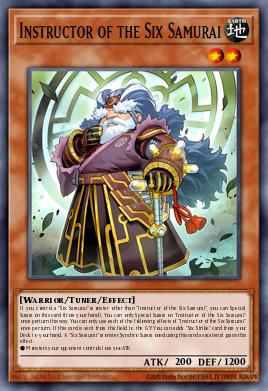
Six Samurai Midrange – Warrior Toolbox Analysis
The supplied mainCount and the individual Main Deck counts both equal 40; all listed ratios are preserved without adding a card. Extra Deck totals 15 and Side Deck is empty. Kageki/Kizan and the two newer Tuners convert monsters into Battle Shogun, Bushido Counters, Shi En Synchros and recursion. This is a structural analysis, not a verification of the current Master Duel forbidden/limited list.
Budget Six Samurai Midrange: 41-card deck analysis
This 41-card list plays as a budget midrange-combo deck: Kageki, Fuma, Kizan, and Grandmaster create bodies; Six Samurai United, Shien's Dojo, Gateway of the Six, and Battle Shogun convert repeated summons into resources; practical end boards revolve around Shi En, non-engine interaction, and utility Extra Deck threats.
Dark Magician Circle Midrange — exact 40/15 analysis
A 40-card Main and 15-card Extra with no Side. Three each of Souls, Rod and Illusion locate and recycle resources; two Circle and two Eternal Soul establish banish pressure; two Super Polymerization help going second. Lines use only listed cards and state their conditions/chains. No inference about current legality or meta.


Budget Red Dragon Archfiend Resonator Combo — exact 40/15 analysis
40 Main, 15 Extra, 0 Side. Soul/Bone fixes Levels to make Abyss plus Red Zone; Crimson/Wildwind recruits three Tuners for Supernova. Searches improve access but Bone spends another card, Extra Deck locks matter and payoff choice depends on disruption.
Performapal Raging Pendulum: Scale, Raging, Finish Going Second
This exact list assembles scales via Joker and Sorcerer, uses the Skill to move Odd-Eyes Pendulum Dragon and Oafdragon Magician into Extra, then combines Dark Rebellion with a Level 7 Dragon for Odd-Eyes Raging Dragon. Going second means removing interference before committing resources; Rank 4s and follow-up matter when Raging is unavailable. Lines follow the supplied card and Skill text without invented meta or banlist claims.
Budget Gladiator Beast Combo – Specific Deck Analysis
This list is a budget Gladiator Beast combo-midrange deck with a substantial trap layer. Its key openings are Rescue Rabbit plus Test Tiger for a properly structured Test Panther field, and Unexpected Dai for a free Gladiator Beast Andal before the Normal Summon. Test Panther converts a remaining Gladiator Beast into a better tag target, while Tamer Editor and Domitianus form the main first-turn Fusion payoff. Going second, Dragases provides a Battle Phase bridge and Gyzarus supplies immediate removal. For cards appearing in both Main and Side, ratioAnalysis count represents the total number across Main plus Side, matching the requested ratio validation.
Pure Lightsworn Grind — Specific 40/15/15 Deck Analysis
This list plays as a pure Lightsworn grind deck rather than a high-speed modern combo shell. Its three main pillars are Charge of the Light Brigade/Solar Recharge for acceleration, Lumina/Raiden plus Level 4 bodies for converting the Graveyard into field presence, and Judgment Dragon/Michael/Minerva for turning accumulated resources into board pressure. Its strength is that each mill can simultaneously improve the Graveyard, trigger Wulf or Minerva, create Lumina targets and advance Judgment Dragon's summon condition. The tradeoff is a high number of context-dependent draws such as Wulf, Felis, Gragonith, Lightsworn Barrier and Punishment Dragon, making sequencing and Normal Summon management especially important.

Lightsworn Graveyard Grind — Horus/Tearlaments Hybrid
This list is not a one-dimensional pure Lightsworn combo deck. It is a layered graveyard engine. Lightsworn Dragonling, Weiss, Charge of the Light Brigade, Solar Recharge and Raiden establish the GY; Wulf and Felis turn mills into bodies; Horus converts hand cards into graveyard setup while producing Level 8 monsters for The Zombie Vampire; Tearlaments converts effect-based mills into Fusion access; Mudora and Keldo protect or attack graveyard resources; Judgment Dragon and Punishment Dragon function as late-game payoffs. Its greatest strength is that one productive mill can activate several engines at once. Its weakness is that the 45-card list contains several cards that are much stronger in the GY than in the opening hand, and precise disruption on Charge, Dragonling, Weiss, King's Sarcophagus or Tearlaments Fusion triggers can sharply reduce its tempo.

Lightsworn Budget Grind: Turning Mills into Resources
This Lightsworn build is structured more as a grind deck than an all-in combo deck. Charge of the Light Brigade, Solar Recharge, Raiden, and other milling effects turn the Deck into a secondary resource pool, while Wulf, Felis, Weiss, Lightsworn Dragonling, and Lightsworn Aegis reward cards being sent from the Deck or an established GY. Lumina is the key bridge between graveyard resources and field presence, while Judgment Dragon, Michael, and Minerva, the Exalted Lightsworn convert accumulated resources into board control. Its main weaknesses are milling variance, awkward opening draws involving Wulf/Felis, and meaningful dependence on high-value Normal Summons such as Lumina or Raiden.

Pure Ninja Midrange – 40-Card Structural Analysis
This list plays Ninja as a midrange engine rather than an all-in combo deck. Its core axis is Ninja Grandmaster Hanzo, Tobari the Sky Ninja, Mitsu the Insect Ninja, Ninjitsu Art of Dancing Leaves, and the Ninja Fusion monsters. The deck layers small interactions: Mitsu negates a monster effect, Meizen summons a Ninja directly from the Deck, Jioh turns opposing monsters face-down, Yaguramaru banishes a card, Book of Moon manipulates monster state, and Dancing Leaves converts a Ninja or face-down monster into the exact Ninja needed from the Deck. Baku, Kagero, Iron Digger, and Tenchi Kaimei provide follow-up so the deck can continue after the first exchange. This analysis preserves the submitted 40 Main / 15 Extra / 15 Side ratios exactly and does not make a claim about the current legality of those ratios.
Budget Ninja Midrange — Specific Deck Analysis
This exact list operates as a Ninja midrange/control deck. Hanzo, Mitsu, Tobari, and Dancing Leaves form the deployment core; Meizen turns an opponent's card or effect activation into access to a Ninja from the Deck; Jioh, Book of Moon, Lost Wind, Compulsory Evacuation Device, and Yaguramaru provide layered disruption. Its main strength is converting face-down monsters and already-used bodies into new resources while Baku, Hidden Village, and Iron Digger support a grind game. The largest structural issue is that the two copies of Ninjitsu Art of Super-Transformation have no Dragon, Dinosaur, or Sea Serpent in the Main Deck to summon, so they have no compatible engine target in this configuration. The nine-card Extra Deck is heavily Ninja-focused, sacrificing broad utility for budget efficiency and archetypal cohesion.

Blackwing Wings Combo — Specific Deck Analysis
This exact list is a compact Blackwing combo deck. Black Whirlwind turns Normal Summons into additional resources, while Bora, Kris, Gale, Oroshi and Harmattan convert those resources into Synchro material. Simoon is the strongest natural starter because it places Black Whirlwind and Normal Summons itself. There is, however, an important construction issue: none of the monsters in the listed 20-card Main Deck mentions "Black-Winged Dragon", so the second effect of Wings to the Heavens has no legal monster to reveal. The third Skill effect remains valuable because it can place Blackwing Armor Master face-down and add Blackbird Close from outside the Deck. Samurai Destroyer is also effectively unusable under the Skill's persistent summoning restriction because it is neither a Blackwing nor a Level 10 or lower DARK Dragon or Winged Beast Synchro.

Blackwing Synchro Combo — Black Whirlwind Resource Conversion and DARK Synchro Tempo
This 20-card Blackwing list is a combo-tempo build. Black Whirlwind or Simoon turns the first Normal Summon into additional resources, then self-Summoning Blackwings provide the bodies needed for Level 6-8 Synchros. Raikiri is the primary board-breaking Synchro, Chidori supplies ATK pressure and Synchro recovery, while Blackbird Close adds monster-effect interaction and can transition the board into Black-Winged Dragon. Two Cosmic Cyclone and two Forbidden Lance occupy 20% of the Main Deck, showing that the list deliberately gives up some engine density in exchange for making its key summons more likely to resolve.

Blackwing Competitive Midrange — Specific Deck Analysis
This 40-card build maximizes access to Sudri, Vata, Simoon and Black Whirlwind, uses Shamal plus Black Feather Whirlwind as its resource bridge, and converts small Blackwings into Black-Winged Dragon, Boreastorm, Black-Winged Assault Dragon, Full Armor Master or Bystial Dis Pater. Its strength is not only its combo ceiling but its ability to redirect after disruption: an Impermanence-negated Vata remains a Tuner, Zephyros turns a face-up card into revival value, Shamal recovers Blackwings, and Twin Shadow converts the GY/banished zone back into a Synchro. The deck is still meaningfully dependent on resolving its early Normal Summon/search infrastructure, making Sudri, Simoon/Whirlwind and Vata key choke points.
Budget Blackwing Midrange — Synchro Engine, Grind, and Disruption
This is an engine-heavy Blackwing midrange list rather than a hand-trap-heavy build. Three each of Simoon, Sudri, Vata, and Shamal create a dense opener suite; Black Whirlwind and Black Feather Whirlwind turn Normal/Synchro Summons into additional resources; Chinook, Twin Shadow, Lost Wind, Compulsory, and Cosmic Cyclone provide interaction. The deck performs best when it does not spend every resource on one turn, instead ending on a durable Synchro, remaining disruption, and Whirlwind/Blackwing follow-up.


HERO Alliance Breaker — Strategic Analysis
HERO Alliance Breaker is a Going Second deck built around turning its Normal Summon into a high-value decision point. Elemental HERO Stratos provides consistency, Elemental HERO Blazeman accesses Polymerization, Elemental HERO Solid Soldier generates two bodies from one Normal Summon, and Elemental HERO Neos is both material and the trigger for HERO Alliance. The deck uses two distinct Fusion layers: Polymerization and Miracle Fusion access Attribute-based Elemental HERO Fusions, while Neos Fusion is a direct one-card route to Elemental HERO Brave Neos but prevents further Special Summons after it resolves. Book of Moon and Cosmic Cyclone soften established boards before commitment, while Super Polymerization is especially threatening when an opposing monster's Attribute matches Great Tornado, Gaia, Escuridao, Nova Master, or The Shining.
Elemental HERO Second Strike — Tactical Analysis
Elemental HERO Second Strike is a 20-card going-second Fusion deck. Three Blazeman plus two Polymerization establish the first Fusion layer, while two Miracle Fusion convert the materials already spent into a second wave. Three Elemental HERO Neos support HERO Alliance and allow a Normal Summoned Neos to become access to Super Polymerization. Sunrise is the central bridge: it requires two HERO monsters with different Attributes, searches Miracle Fusion when Special Summoned, and turns attacks involving another HERO into field destruction. Liquid Soldier provides draw/filter value as Fusion material, while Solid Soldier expands the field and can revive another HERO when a Spell effect sends it from the Monster Zone to the GY. The main weaknesses are the need to pair monsters with Fusion access, heavy competition for the Normal Summon, and hands where multiple Neos are awkward before the Skill is leveraged.
Archfiend Breaker — Going-Second Fiend Control
Archfiend Breaker is a 40-card going-second list combining a compact Archfiend core with Tour Guide/Fiendish Rhino Warrior and a large interaction package. It does not play like a pure Archfiend combo deck. Its primary plan is to reduce the opponent's board with Maxx "C", Ash Blossom & Joyous Spring, Infinite Impermanence, Lightning Storm, Forbidden Droplet and Triple Tactics Talent, then exploit Archfiend Palabyrinth, Falling Down, Archfiend Emperor and the Link toolbox. The most important piloting skill is managing the Special Summon restrictions imposed by Archfiend Emperor and Muckraker From the Underworld, because incorrect sequencing can shut off most non-Fiend Extra Deck lines.
Budget Archfiend Going Second — Fiend/GY Resource Control
This is a 40-card budget-oriented going-second Archfiend list built more like a midrange/control deck than a high-speed combo deck. Its strongest core is Tour Guide From the Underworld plus Fiendish Rhino Warrior, turning a Normal Summon into Dante while setting up the GY. Archfiend Heiress then converts being sent by a card effect into an Archfiend search. Falling Down is a major tempo tool but depends on keeping an Archfiend card on the field. Archfiend Emperor provides proactive removal but restricts your Special Summons to Fiends while face-up, so non-Fiend Extra Deck summons must be sequenced first.

Elemental HERO Going Second — Specific Deck Analysis
This specific list is a going-second HERO build with high starter density, a large hand-trap/board-breaker suite, the Vision HERO engine for body generation, Cross Crusader for converting Destiny HERO graveyard resources into searches, Sunrise/Miracle Fusion for a second offensive wave, Mask Change for Dark Law/Acid/Blast, and Fusion Destiny as an independent route into Destroyer Phoenix Enforcer. Its main strength is layered access to the engine and meaningful follow-up from spent materials. Its main weakness is that several engine cards, especially Vision HERO Increase, Destiny HERO - Malicious and Destiny HERO - Denier, are stronger in the Deck or GY than in the opening hand, while Vyon, Cross Crusader and Fusion Destiny are clear points where disruption can matter greatly.
Favorite Duel Elemental HERO Midrange Analysis
This 21-card build prioritizes Elemental HERO Stratos consistency, converts the Normal Monsters required by Favorite Duel into Graveyard material for Miracle Fusion, and backs the engine with six Quick-Play interaction cards. It is not a pure combo deck. Its main strength is layered resource exchange: force disruption onto Stratos or the first Fusion, then use Favorite Duel, Miracle Fusion and Liquid Soldier to rebuild value. Flame Wingman is especially important because it both enables the Skill's Skyscraper effect and becomes the mandatory bridge into Shining Flare Wingman.
HERO Alliance Midrange — Layered Fusion Pressure
This is not a pure all-in HERO combo deck. It is a midrange build centered on valuable Normal Summons, HERO Alliance, and Quick-Play interaction. Its highest-value branch is Normal Summoning Elemental HERO Neos to unlock HERO Alliance, converting Neos plus another HERO into a Fusion, then using Elemental HERO Sunrise, Elemental HERO Liquid Soldier, and Miracle Fusion to turn spent materials into another wave of pressure. Its main weakness is Normal Summon competition among Neos, Stratos, Solid Soldier, Liquid Soldier, and Blazeman. The list also contains exactly one Main Deck copy of Miracle Fusion, so that copy must be distinguished from any Fusion Spell provided from outside the Deck by HERO Alliance.
HERO Alliance Combo — 20-Card Fusion Tempo
This deck uses a high HERO density to turn its Normal Summon into consecutive Fusion Summons. Stratos, Solid Soldier, and Blazeman provide consistency; Liquid Soldier converts Fusion materials into resource value; Sunrise bridges Polymerization into Miracle Fusion; and HERO Alliance turns Elemental HERO Neos into a valid Normal Summon while creating additional Fusion access. The strongest core sequence is to make Sunrise first, then reuse HERO monsters in the GY with Miracle Fusion for a second Fusion Monster.


Performapal Pure Midrange 42/15/15 Analysis
This exact list is closer to midrange than an all-in combo deck. Skullcrobat Joker, Monkeyboard, Secondonkey, Pendulum Sorcerer and the hand-fixing spells build incremental card advantage; Beyond the Pendulum, Heavymetalfoes Electrumite and Exceed the Pendulum convert accumulated Pendulum bodies into tempo; Odd-Eyes Dissolver provides access to Odd-Eyes Vortex Dragon and compatible Fusions. Its main strength is recycling scales and Pendulum Monsters across turns. Its main weaknesses are reliance on establishing two compatible scales, competition for the Normal Summon, and several Extra Deck slots whose required materials are not naturally present in this 42-card Main Deck.


Performapal Pendulum Midrange Analysis
This list combines the Performapal engine with Magician Pendulum cards to build reliable scales, Pendulum Summon a large wave of resources, and then convert those bodies into Synchro, Xyz, Fusion or Link monsters depending on the board. Performapal Skullcrobat Joker, Wisdom-Eye Magician, Duelist Alliance and Pendulum Call provide consistency; Harmonizing Magician and Performapal Pendulum Sorcerer turn Pendulum Summons into card advantage; Beyond the Pendulum and Exceed the Pendulum improve access to Pendulum resources; while S:P Little Knight, Odd-Eyes Vortex Dragon, Ignister Prominence, Accesscode Talker and Underworld Goddess supply different forms of interaction or closing power. The deck can grind through face-up Pendulum Monsters in the Extra Deck, but sequencing Pendulum Call, Wisdom-Eye Magician, Beyond the Pendulum and the actual Pendulum Summon correctly is critical.

Performapal Budget Pendulum Midrange Analysis
This deck plays as a Performapal/Magician/Odd-Eyes Pendulum midrange hybrid. Performapal Skullcrobat Joker, Wisdom-Eye Magician, Duelist Alliance and Pendulum Call provide consistency, while Performapal Pendulum Sorcerer, Harmonizing Magician, Oafdragon Magician and Star Pendulumgraph turn established resources into long-term advantage. The Extra Deck is not focused on one oversized negate combo; instead it offers adaptable routes: Odd-Eyes Vortex Dragon for interaction, Supreme King Dragon Clear Wing and Ignister Prominence for board breaking, Timestar Magician and Majester Paladin for follow-up, and Beyond the Pendulum/Exceed the Pendulum for Pendulum resource conversion. The main weaknesses are reliance on two functional scales, the importance of the first Normal Summon, and careful sequencing around Beyond the Pendulum. The deck also has no Side Deck, so post-game-one adaptation is limited.