
Card effects featured in this guide
English text from the card catalog. Check the in-game text for Duel Links specific adjustments.
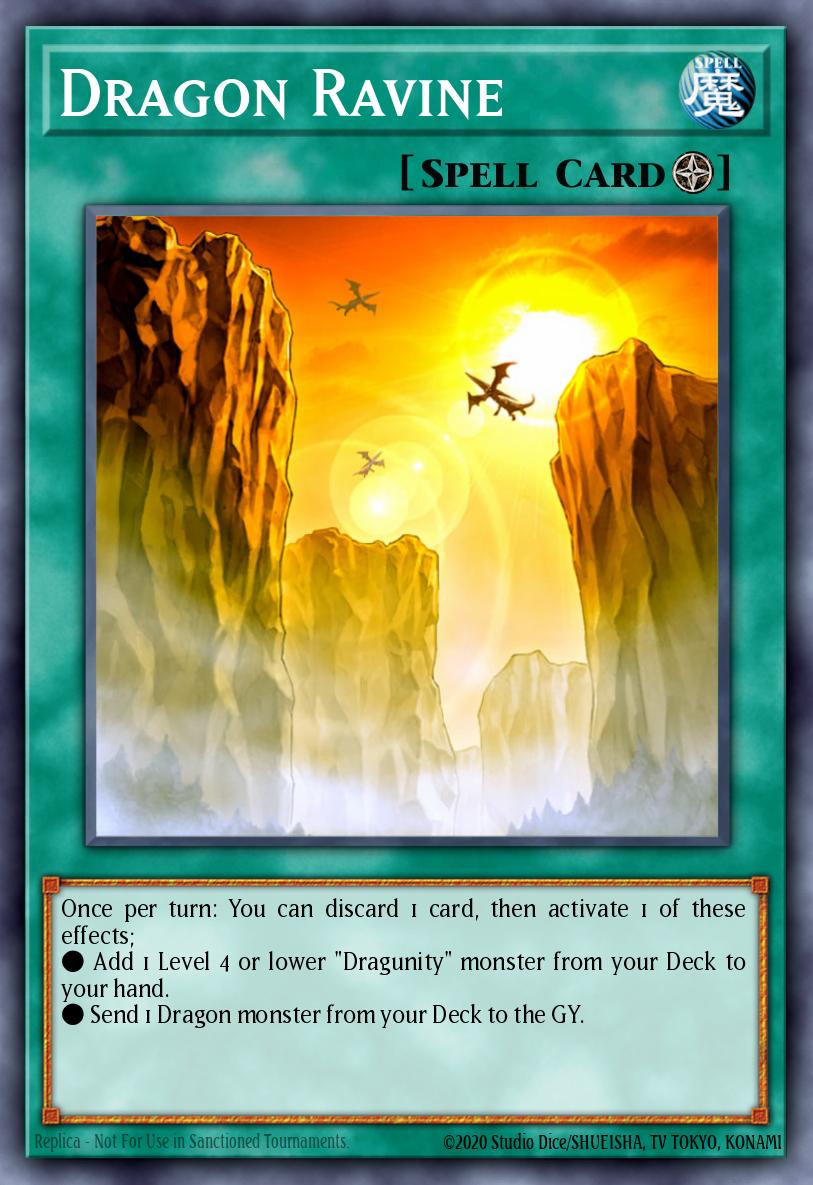
Dragon Ravine
Once per turn: You can discard 1 card, then activate 1 of these effects;
● Add 1 Level 4 or lower "Dragunity" monster from your Deck to your hand.
● Send 1 Dragon monster from your Deck to the GY.
1. Keep a Dragunity card to pay for Senatus
Stars of Synchro contains Dragon Ravine. Once per turn with that copy, discard a card to add a Level 4 or lower Dragunity from Deck or send a Dragon from Deck to the Graveyard. Search Senatus when you need the starter. Ravine can discard any card, while Senatus needs a Dragunity. Reserve that card if you plan to use both.
| Field | Value |
|---|---|
| Format | Duel Links Speed Duel |
| Entry | Dragunity Overdrive and Stars of Synchro |
2. Equip Phalanx twice to reach Level 10
In KONAMI’s Dragunity Overdrive example, Normal Summon Senatus and equip Level 2 Phalanx from Deck. Leyvaten banishes the equipped Senatus to Special Summon itself, sending Phalanx to the Graveyard. Equip Phalanx again with Leyvaten, then summon it from the Spell and Trap Zone. Level 8 Leyvaten plus Level 2 Phalanx makes Ascalon within Senatus’s Dragon Extra Deck restriction.
3. Choose which Dragunity can pay for each banish
Ascalon banishes a Dragunity from your Graveyard as cost and targets an opposing monster to banish. Its removal has no once-per-turn limit, so two eligible Graveyard cards can pay for two legal activations. Spending Phalanx can remove a Tuner you wanted to equip again. If the first target moves in response, the paid card is still gone.
4. Keep a Dragunity Synchro for Ascalon’s replacement
If an opponent’s card destroys Synchro Summoned Ascalon under its owner’s control, it can call a Dragunity Synchro with 3,000 ATK or less from the Extra Deck. The summon counts as a Synchro Summon. Check which legal option remains and track its named once-per-turn recovery separately from removal.
5. Compare spending the last discard on Ravine or Senatus
Try the Senatus route with Ravine and exactly one other Dragunity in hand. Compare discarding it to Ravine with saving it for Senatus. If you reach Ascalon, count how many removals you can pay and which Extra Deck replacement remains.