DuelIndex · Strategy Lab
See Beyond the Card, Master Every Move
Understand cards faster through practical usage, sample combos, strengths and weaknesses, key interactions, and related cards.
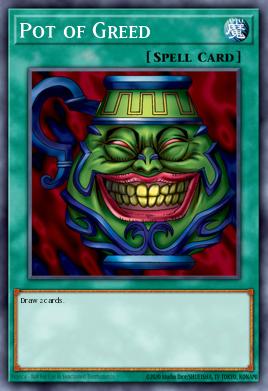
Pot of Greed — Two Cards, One Explosive Tempo Swing
Activate to draw 2 cards. On successful resolution, one card becomes two new cards: net +1 card and increased access to engine pieces, removal, or follow-up. Real value depends on what you draw and when; legality is format-dependent.
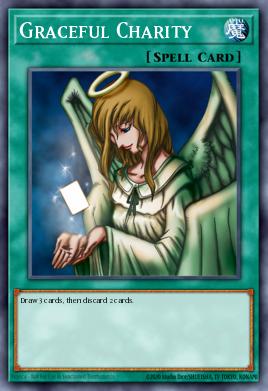
Graceful Charity — Draw Three, Choose Two to Discard
Draw three, then discard two within one effect: no standalone +1 in hand, but extraordinary card selection and discard synergies. Listed as Forbidden in TCG/OCG by the supplied data; use only where permitted.

That Grass Looks Greener — Turning Deck Size into Resources
If your remaining Deck contains more cards than your opponent’s, send cards from its top to the GY until the Deck counts match. A 55-versus-35 comparison mills 20; actual value depends on GY payoffs, protecting resolution, and retaining a fallback if Grass is stopped.

Heavymetalfoes Electrumite — Pendulum Resource Converter
Electrumite stocks a named Pendulum in the face-up Extra Deck, trades another face-up card for a Pendulum in hand, and may draw when a Pendulum Zone card leaves the field. Its strength is sequencing and resource conversion—not an automatic combo on every hand.
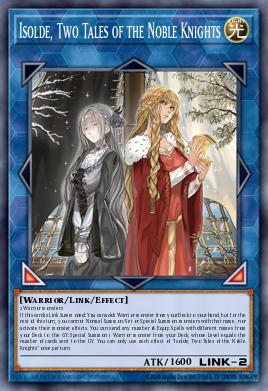
Isolde — Two Tales, One Warrior Resource Engine
Isolde converts two Warriors into a Warrior search plus a different Warrior summoned from Deck by sending differently named Equip Spells. The searched name cannot be summoned or have its monster effects activated for the rest of that turn; the Deck-summoned monster is not subject to that restriction. It is a powerful resource distributor with a clear second-effect choke point.

Block Dragon — turning the Graveyard into a new hand
Block Dragon converts three EARTH monsters in hand/GY into a recurring 2500/3000 body. When sent from field to GY, it can search up to three Rock monsters whose combined Levels are exactly 8. Its strategic value is follow-up after becoming material; account for EARTH fuel, the precise trigger, and search disruption.

Chaos Ruler: Five Cards, Two Resource Cycles
Chaos Ruler is more than a five-card reveal: it can take a LIGHT/DARK monster, send the remainder to the GY, and later revive by banishing opposing Attributes. This is a historical/hypothetical strategy guide, not a claim that the card is legal in current TCG/OCG play.
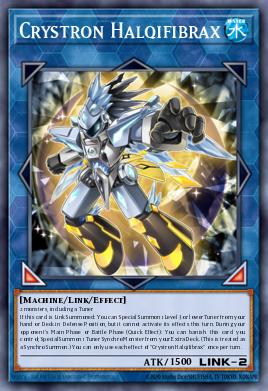
Crystron Halqifibrax — Tuner bridge and opponent-turn choices
Halqifibrax requires exactly two monsters including a Tuner. On Link Summon it recruits a Level 3 or lower Tuner from hand or Deck in Defense Position, with activation of that monster’s effects restricted for the turn. During the opponent’s Main or Battle Phase, it can banish itself as cost to Special Summon a Tuner Synchro from the Extra Deck, treated as a Synchro Summon. Each effect is a separate hard once per turn. It is Forbidden in TCG Advanced under the list effective September 21, 2026; all sample lines are historical/casual.

Predaplant Verte Anaconda — Two Bodies into a Fusion Line
Verte converts exactly two Effect Monsters into access to an eligible Fusion/Polymerization Normal or Quick-Play Spell from Deck at a cost of 2000 LP, then bars further Special Summons that turn. Its value is reducing the need to draw the Fusion Spell; its liabilities are a fragile 500-ATK choke point, Fusion-material requirements, and sequencing. The lines below are historical/hypothetical, not TCG/OCG-legal deck advice.

Destiny HERO - Destroyer Phoenix Enforcer: one destruction, pressure across turns
DPE turns a single removal into an attrition loop: it often destroys itself and an opposing key card, then schedules a Destiny HERO to return in the next turn’s Standby Phase. Its value lies in resource exchange and constraining sequencing rather than merely 2500 ATK.

Red-Eyes Dark Dragoon — Board pressure, tempo, and the price of a boss
Dragoon combines targeting/destruction protection, monster removal with burn, and one activation negate each turn. Its real value depends on the Normal Monsters used as materials, a discard in hand, and the summoning lock of the Red-Eyes Fusion route.
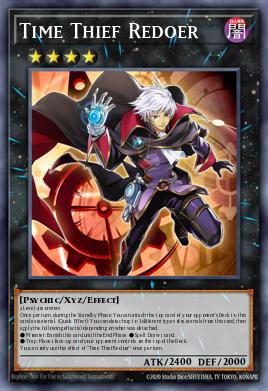
Time Thief Redoer — stealing tempo through material choices
A flexible Rank 4 Xyz that takes the opponent’s top Deck card in each Standby Phase, then trades material types for a temporary escape, a draw, or a face-up opposing card placed atop its owner’s Deck. Its real strength lies in securing Trap material and timing interaction.
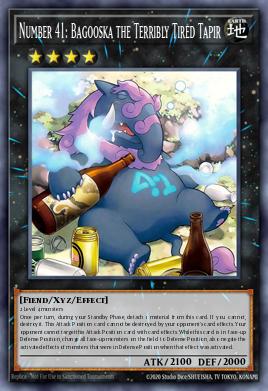
Number 41: Bagooska — a tactical pause button
Bagooska converts two Level 4 monsters into a tempo tool. In face-up Defense Position it turns eligible face-up monsters to Defense and negates activated effects of monsters that were in Defense when they activated. In Attack Position it gains protection from the opponent’s targeting and destruction effects instead. It does not shut off Link Monsters or effects activated in other locations, and its Defense lock also constrains your own monsters.
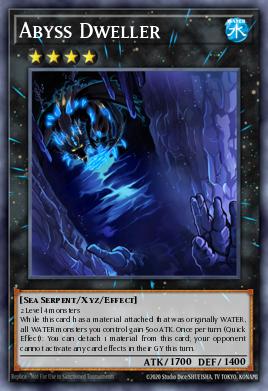
Abyss Dweller — Buying an Entire Turn by Locking the GY
Abyss Dweller neither removes the GY nor negates effects already activated there. Its strength lies in resolving its Quick Effect before the opponent starts a GY-dependent sequence. All lines below assume a format in which this card is permitted.
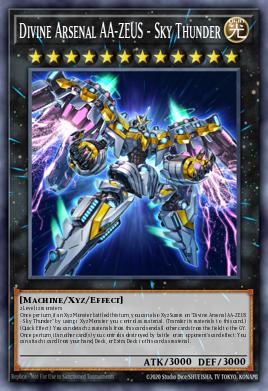
Divine Arsenal AA-ZEUS – The Xyz Board Reset
ZEUS is a going-second board breaker and an opponent-turn threat. Once any Xyz Monster has battled this turn, you can Xyz Summon it over an Xyz you control. Detaching two materials sends every other card on the field to the GY, without targeting or destroying. Its real power depends on material count, forcing interaction, and the follow-up you preserve after clearing your own field.

Borreload Savage Dragon — Turning a Link Monster into a Negation
Savage needs a Level 8 Tuner/non-Tuner combination and a Link Monster in the GY when Synchro Summoned. Equipping that Link supplies Borrel Counters equal to its Link Rating, half its ATK as a boost, and one activation negate per turn while counters remain. It is a powerful interaction point, not immunity or unlimited negates.
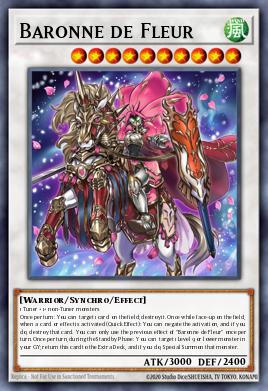
Baronne de Fleur — One veto, multiple layers of pressure
Baronne de Fleur is a generic Level 10 Synchro boss with once-per-turn targeted destruction, a once-while-face-up activation negate, and a Standby Phase exchange for a Level 9 or lower monster in the GY. The strategic question is when to spend its single veto.
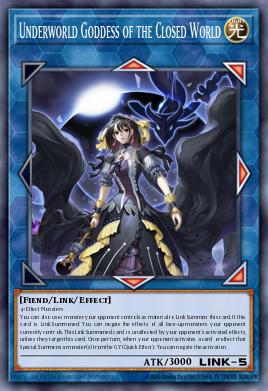
Underworld Goddess of the Closed World: Turn Their Boss into Material
Use exactly one opposing monster alongside at least three of your own Effect Monsters to Link Summon, remove a difficult boss without targeting or destroying it, then negate the other face-up monsters and threaten graveyard revival lines.
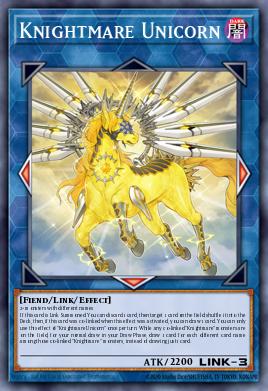
Knightmare Unicorn — Trading Resources to Turn the Board
Knightmare Unicorn converts established monsters and a discard into targeted, non-destruction removal. A co-link at activation can add a draw after the shuffle resolves. Its real skill test is target selection, timing, and what remains when the opponent intervenes.
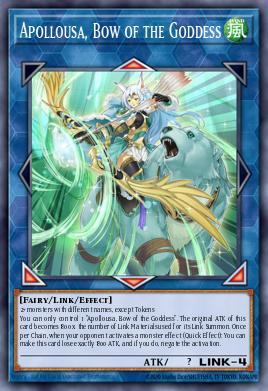
Apollousa, Bow of the Goddess — trading ATK for control
A generic Link-4 negating monster-effect activations once per Chain by losing exactly 800 ATK. It converts spare bodies into tempo but is vulnerable to Spell/Trap answers and battle. TCG Forbidden on the September 21, 2026 list; lines are historical/permitting-format examples.

I:P Masquerena — turn resources into interaction at the right moment
I:P is not a negate. It converts two non-Link monsters into an opponent-turn Link Summon and grants the resulting Link Monster protection from destruction by opposing card effects. Its value lies in the destination, timing, and resources retained.

S:P Little Knight — One Link-2, Two Control Windows
S:P Little Knight is a flexible Extra Deck tool. If Link Summoned using a Fusion, Synchro, Xyz, or Link Monster, it can target and banish a card on the field or in either GY, at the cost of all your monsters being unable to attack directly that turn. In response to an opponent activating a card or effect, it can temporarily banish two face-up monsters, including one you control. Each distinct effect is once per turn by name.
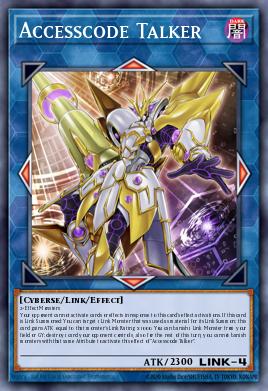
Accesscode Talker — closing the game through protected effect activations
Accesscode Talker is a board-breaking finisher: use a Link-3 as direct material to reach 5300 ATK, then banish Link Monsters of different Attributes from your field or GY to destroy opposing cards one at a time. The opponent cannot chain directly to its effect activations, but can interact at the Summon window, beforehand, or in later windows.

Eldlich the Golden Lord — turning traps into resources
Eldlich is both hand-based removal and a recurring graveyard threat. Its real value comes from choosing which Spell/Trap to send, maintaining the Eldlixir–Golden Land rotation, and forcing answers to a returning monster. Its two effects have separate once-per-turn limits.

Floowandereeze & Robina — the Normal Summon chain starter
Robina searches any Level 4 or lower Winged Beast and grants another Normal Summon; while banished, it can return to hand after your Winged Beast is Normal Summoned. Protect the opening effect without losing the Tribute bodies needed for the payoff.
Vanquish Soul Razen — Starter and Column Enforcer
On Normal/Special Summon, Razen searches a non-Warrior Vanquish Soul. Its Quick Effect either grants itself effect-destruction protection by revealing FIRE or destroys every other monster in its column by revealing FIRE and DARK. Its real value is tutoring, retained hand Attributes, and column placement—not 1800 ATK alone.

Mathmech Circular — One Card, an Entire Equation
Circular sends another Mathmech from Deck to GY to Special Summon itself. While it remains under your control, a subsequent Mathmech summon lets it search a Mathmech Spell/Trap. It starts without spending the Normal Summon and can establish Superfactorial, but its first effect allows only one monster to attack for the remainder of that turn.

Salamangreat Gazelle — One Graveyard Send, an Entire Resource Loop
Gazelle Special Summons itself when another Salamangreat monster reaches your GY, then sends any Salamangreat card except itself from Deck to GY. Its real value is choosing the right resource and converting it into interaction or follow-up through Sunlight Wolf.

Sky Striker Ace - Raye: the revolving core of Sky Striker
Raye is a starter and recovery engine: her Quick Effect Tributes herself to summon a Sky Striker Ace from the Extra Deck to the Extra Monster Zone, while her GY effect brings her back when your face-up Ace Link is destroyed by battle or leaves by an opponent’s card effect. Timing, Spell access, and follow-up matter far more than 1500 ATK.

Sky Striker Mobilize - Engage! — the resource converter
Engage! searches a differently named Sky Striker card while your Main Monster Zones are empty, then optionally draws if you have at least three Spells in the GY at resolution. Its defining strength is selecting the right answer and recurring it with Kagari, not simply drawing a card.

Swordsoul Grandmaster - Chixiao: the pivot of the sword formation
Chixiao bridges Swordsoul lines: on Synchro Summon it adds or banishes a Swordsoul card from the Deck; on another turn its Quick Effect banishes a qualifying card from hand or GY to negate another Effect Monster on the field. Crucially, only ONE of its two effects can be used each turn.

Swordsoul of Mo Ye — one starter, two layers of value
Mo Ye reveals a Swordsoul card or Wyrm in hand to summon a Level 4 Tuner Token, then pairs with it for a Level 8 Synchro. If sent to the GY as Synchro Material, it draws a card. Its real value is combined access, tempo and the option to preserve Longyuan as a fallback.

Expurrely Noir — the five-material dilemma
Noir turns Xyz materials into a finite budget: five maintain protection from the opponent’s activated effects, while two buy one targeted bottom-deck removal. Keeping a Level 1 Purrely attached grants Quick Effect timing. The strongest play is often to wait.

My Friend Purrely — finding the right Memory and rebuilding after losing an Xyz
Pay 500 LP to add one of three revealed Purrely cards randomly selected by the opponent; when your face-up Purrely Xyz leaves the field because of an opponent’s card, recover up to three differently named Purrely Quick-Play Spells from the GY. Its power lies in designing the reveal and rebuilding, not in a universally guaranteed search.

Purrely — One Level 1, Multiple Xyz Routes
Purrely excavates three cards for an archetypal Spell/Trap and converts a revealed Quick-Play Memory into a legal Xyz Summon. Its value comes from choosing the right Memory, timing the summon, and preserving resources through disruption.

Rescue-ACE Turbulence — command center of four responses
Turbulence is a key Rescue-ACE payoff: banish two Rescue-ACE cards in the GY to summon it from hand, Set up to four differently named Quick-Play Spells/Normal Traps from Deck, and punish an opponent effect that makes another of your cards leave the field. Its real value depends on resolving the Set effect and managing Hydrant.

Rescue-ACE Hydrant — the engine’s pressure valve
Hydrant does not win through its 0 ATK. It searches the right Rescue-ACE monster, enables one Rescue-ACE-effect-Set Quick-Play Spell or Trap on the turn it was Set, and forces precise counterplay.

Phantom of Yubel — Turning disruption into resources
Phantom of Yubel is proactive interaction summoned by recycling materials from hand/field/GY. Its Tribute rewrites an opposing monster effect, often allowing us to destroy Spirit of Yubel for follow-up; it is not an omni-negate.

Nightmare Pain: turning pain into advantage
A Continuous Spell that destroys a DARK to search Yubel or a Yubel-mentioning card, forces eligible opposing attackers toward Yubel monsters, and reflects relevant battle damage.

Yubel — turning destruction into advantage
Yubel is a Level 10 DARK Fiend that cannot be destroyed by battle, prevents its controller taking battle damage involving it, and burns an attacker when face-up in Attack Position. Its strategic hinge is being destroyed by an effect other than its own to summon Yubel - Terror Incarnate.

Welcome Labrynth — opening the control loop
Welcome Labrynth summons the right Labrynth monster from Deck, but restricts Special Summons from the Deck/Extra Deck to Fiends until the end of the next turn after it resolves. On a later turn, a monster leaving the field through your Normal Trap effect can Set it again from the GY. Its value lies in target choice, trap timing, and a sustained resource loop—not merely one summon.

Lovely Labrynth of the Silver Castle — Mistress of the Trap Loop
Lovely is a Level 8 Labrynth payoff. She prevents monster effects from responding directly to your Normal Trap Card activations, Sets a Normal Trap from the GY, and destroys an additional opposing card when another monster leaves the field by your Normal Trap effect. Her defining strength is compounding value over several turns, not an automatic OTK.

Lady Labrynth of the Silver Castle — The Trap-Toolbox Architect
Lady is not merely a 3000 ATK body protected while you control a Set card. A prior Labrynth or Normal Trap activation brings her out of hand, and activating a Normal Trap lets her Set a differently named Normal Trap straight from Deck. Her real value is selecting next-turn interaction while demanding an efficient answer from the opponent.
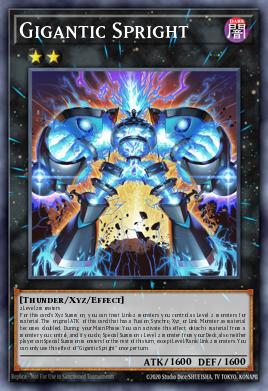
Gigantic Spright — the Rank 2 resource converter
Gigantic Spright turns two Level 2 monsters (or your Link-2 monsters treated as Level 2 for its Xyz Summon) into direct access to a Level 2 in Deck. The crucial decisions are what to summon, when to activate, and which non-2 summons must happen before the restriction resolves.
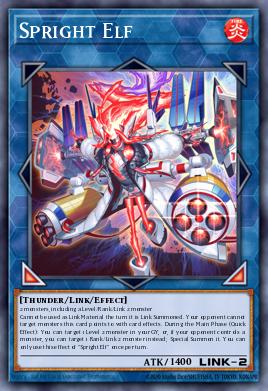
Spright Elf — turning a Level 2 board into recurring tempo
Spright Elf converts two monsters, including a Level/Rank/Link 2, into a Link-2 with two downward arrows. It prevents opposing effects from targeting monsters it points to and offers a once-per-turn Quick Effect revival. Its strategic value is reusing summon triggers, sustaining resources into the opponent’s turn, and making the opponent choose between stopping the extender and stopping the revival. The illustrated duel assumes a format where Elf can be played.

Spright Blue — the Level 2 engine bridge
Blue is both an extender and a searcher: it Special Summons itself from hand beside a Level/Rank 2, then searches another Spright monster on Special Summon. Its value depends on target selection and preserving a fallback through disruption.

Lubellion the Searing Dragon — Branded’s recycling engine
Lubellion turns Fallen of Albaz plus a DARK monster into an intermediate Fusion. On its Fusion Summon it discards a card, then shuffles the named materials for a Level 8-or-lower Fusion from field/GY/face-up banishment into the Deck, commonly making Mirrorjade. It converts and recycles resources rather than providing a free Fusion: it costs a hand card, locks further Extra Deck Summons to Fusions, and cannot attack that turn.

Mirrorjade the Iceblade Dragon — Removal That Funds the Next Turn
Mirrorjade banishes a field monster without targeting while sending an Albaz-related Fusion from the Extra Deck to the GY. Albion can turn that send into a Branded Spell/Trap at the End Phase. Timing matters: after using the banish, Mirrorjade cannot use it next turn.

Fallen of Albaz — Turn Their Monster into Your Material
Fallen of Albaz uses itself and an opponent’s monster to Fusion Summon, combining non-targeting material removal with a new Fusion body. The skill lies in identifying legal materials, drawing out disruption, and protecting a Branded fallback rather than firing its trigger blindly.

Branded Fusion — One Spell, an Entire Resource Engine
Branded Fusion uses exactly two monsters from hand, Deck, or field to Fusion Summon an Extra Deck monster that explicitly lists Fallen of Albaz as material. Its power is both an immediate Fusion and material-related Graveyard value; in exchange it locks Extra Deck Special Summons to Fusion Monsters for the entire activation turn and is vulnerable to Ash Blossom & Joyous Spring.

Kashtira Arise-Heart — turning the Graveyard into exile
Arise-Heart banishes cards that would reach the GY, attaches one banished card per Chain, and spends three materials on a Quick Effect that banishes a field card face-down. Its value is resource denial, tempered by its summoning condition, material count, and vulnerability to negation.
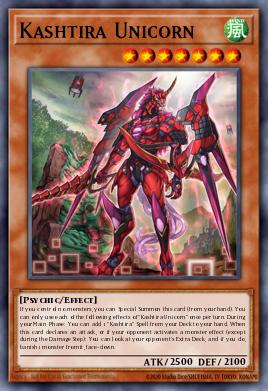
Kashtira Unicorn — One opener, two layers of pressure
A Level 7 WIND Psychic that Special Summons itself while you control no monsters. Its Main Phase effect searches a Kashtira Spell; its attack declaration or an opponent’s monster-effect activation lets you inspect the opponent’s Extra Deck and banish one monster face-down. Its strategic value combines a Normal-Summon-free starter, Spell access, and a tax on opposing monster effects.
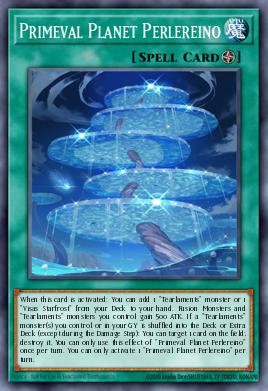
Primeval Planet Perlereino — Recycling Becomes Pressure
A Tearlaments Field Spell that searches a Tearlaments monster or Visas Starfrost on activation, grants +500 ATK to our Fusion and Tearlaments monsters, and once per turn may target and destroy a card when our field/GY Tearlaments is shuffled into Deck/Extra Deck outside the Damage Step.
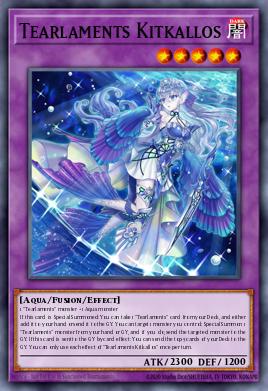
Tearlaments Kitkallos — Fusion Resource Hub
Level 5 DARK/Aqua Fusion (2300/1200), requiring a Tearlaments monster plus an Aqua monster. On Special Summon it adds or sends a Tearlaments card from Deck; it swaps a controlled monster for a Tear from hand/GY; when sent to GY by card effect it mills five. Each effect has a separate named hard once-per-turn restriction. TCG Advanced, September 21, 2026: Forbidden; examples assume a permitted ruleset.
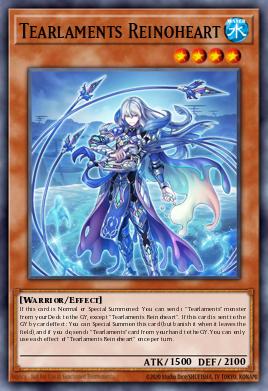
Tearlaments Reinoheart — the graveyard route selector
Reinoheart converts a Summon into a targeted Tearlaments send. If an effect sends it to the GY, it may revive and send a Tearlaments card from hand, but this is not free value: each effect is hard once per turn and revival adds banish-on-leave.

Original Sinful Spoils - Snake-Eye: turning a face-up card into a starter
This Normal Spell sends another face-up card you control to the GY to Special Summon a Level 1 FIRE monster from hand or Deck. From the GY it can banish itself, target a Snake-Eye or Diabellstar monster in your GY, add a Level 1 FIRE monster from Deck, then place that target on the bottom of the Deck. Its two effects share a hard restriction: use only ONE effect per turn, once that turn. The official TCG database currently displays Forbidden; lines here illustrate historical, casual, or otherwise permitted environments.

Diabellstar the Black Witch — turning spare resources into tempo
Diabellstar Special Summons itself by sending a card from hand or field to the GY, then Sets a Sinful Spoils Spell/Trap from the Deck. Its real value is converting a spare resource into a 2500 ATK body and tailored access, with the selected Set determining the pace of the duel.
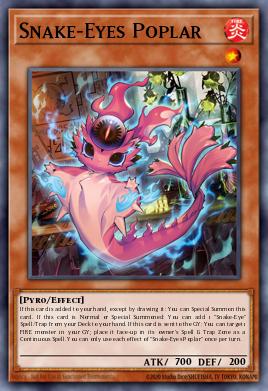
Snake-Eyes Poplar — a bridge across three resource zones
A Level 1 FIRE/Pyro Snake-Eye engine piece: when added outside a draw it can Special Summon itself, on Summon it searches a Snake-Eye Spell/Trap, and on reaching the GY it stores a FIRE monster as a Continuous Spell. Its strength is zone conversion and follow-up rather than 700 ATK.

Snake-Eye Ash — One Summon, Two Layers of Resources
Snake-Eye Ash searches any Level 1 FIRE monster, then can turn itself and another face-up card into another Snake-Eye from hand or Deck. Its real value comes from search selection, preserving the second face-up card, and treating the GY and Spell & Trap Zones as future resources.
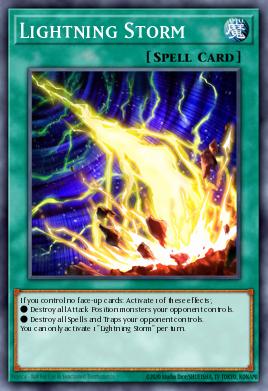
Lightning Storm — Choosing the Board to Break
Lightning Storm is a Normal Spell you can activate only while you control no face-up cards. Choose either to destroy all opposing Attack Position monsters or all opposing Spells/Traps. It turns one card into a chance to reclaim tempo, provided you choose the correct axis and retain follow-up.
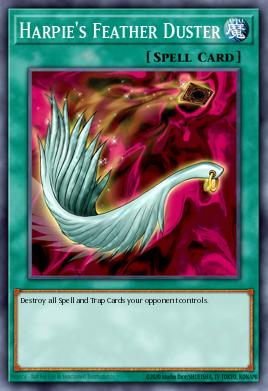
Harpie's Feather Duster — Clearing the Defensive Line
Destroy every Spell/Trap your opponent controls without targeting or touching your own cards. Its real strength is forcing the opponent to use, protect, or lose multiple defenses at once; actual value depends on chained effects, destruction/GY payoffs, and whether you can turn the opening into a win.
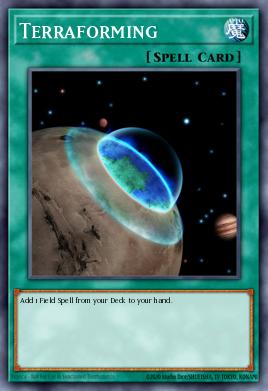
Terraforming — The Key to Field Spells
Terraforming trades itself for a Field Spell from the Deck. It is a one-for-one, not an immediate +1; its real value lies in the engine the Field Spell unlocks. It does not activate that Field Spell and has no printed once-per-turn restriction.
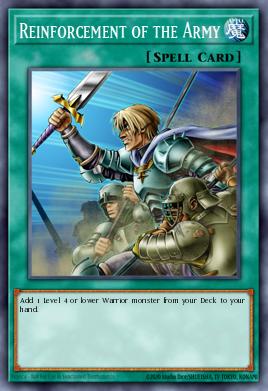
Reinforcement of the Army — One Spell, Multiple Openers
Reinforcement of the Army (ROTA) turns a Normal Spell into any Level 4 or lower Warrior still in your Deck. It does not inherently generate an extra card; it converts a generic card into the starter, extender, or utility piece demanded by the game state. Target choice and timing are the skill tests.
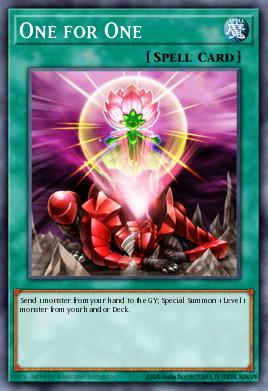
One for One — one Spell, two resource paths
One for One puts a Level 1 directly on the field without spending the Normal Summon. Sending a monster from hand to the GY is a cost: evaluate both the sent monster and the summon target, and plan for Ash Blossom & Joyous Spring.

Monster Reborn — One card, two Graveyards, many lines
Monster Reborn is a Normal Spell that targets one monster in either GY and Special Summons it to your field. Its strength is not merely another body: the timing and target can recover an engine, provide material, or leverage an opponent’s spent monster. It requires a legal target and is vulnerable to targeting disruption.
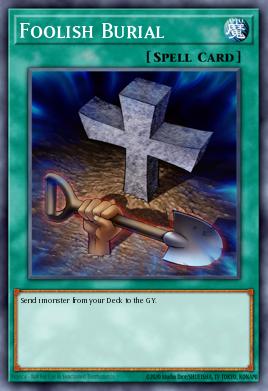
Foolish Burial — Turning the Deck into Graveyard Resources
Foolish Burial sends exactly one monster from your Deck to the GY by effect, not by cost, discard, or destruction. It spends one card to place a useful resource where a graveyard engine can exploit it.
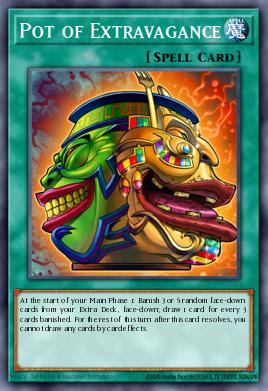
Pot of Extravagance — Trading Extra Deck Flexibility for Draw Power
Pot of Extravagance randomly banishes 3 or 6 face-down Extra Deck cards as cost to draw 1 or 2. Six yields +1 card in hand if it resolves, but future effect draws that turn are shut off and essential Extra Deck pieces may disappear. Deck construction and a credible backup plan determine its real value.

Pot of Desires: Trading Ten Unknown Cards for Two New Decisions
Banish the top ten face-down as the activation cost, then draw two on resolution. Pot of Desires converts uncertain future deck resources into one net card in hand now; its value depends on redundancy, essential targets, and sequencing.

PSY-Framegear Gamma: Counterattack from an Empty Field
Gamma answers an opponent’s monster-effect activation while you control no monsters, Summoning itself and PSY-Frame Driver from hand/Deck/GY, negating the activation and destroying that monster. Its greatest value is protecting an opening play or converting interaction into a Level 8 Synchro; the costs are a usable Driver and the right field state.
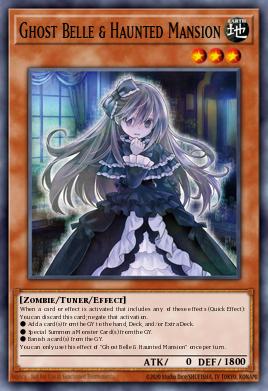
Ghost Belle & Haunted Mansion: Closing the Graveyard Door
Discard Ghost Belle to negate the activation of an effect that includes returning cards from the GY to hand/Deck/Extra Deck, Special Summoning Monster Cards from the GY, or banishing cards from the GY. Its value comes from choosing the precise point where the opponent converts the GY into live resources—especially against Called by the Grave.
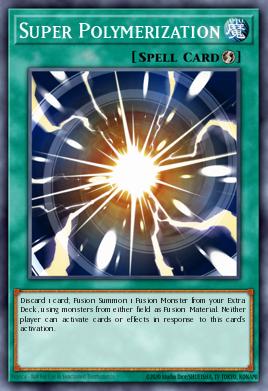
Super Polymerization — turning the opponent’s monsters into your win condition
Super Polymerization discards one card and Fusion Summons using monsters from either field. Neither player can activate cards or effects in response to its activation. Its strength lies in converting opposing bodies into your Fusion Monster, not in universally shutting down all interaction.
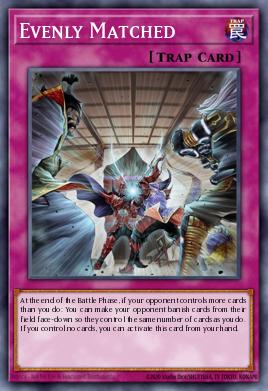
Evenly Matched: Winning by Giving Up the Battle Phase
Going second, enter the Battle Phase with an empty field and activate Evenly Matched from hand at its end: the opponent chooses field cards to banish face-down until the counts match. The face-up Evenly itself counts, so the opponent ordinarily keeps one card. Its strength is broad resource compression, but it deals no damage and can be negated at the critical moment.
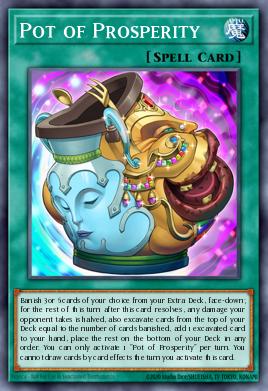
Pot of Prosperity: Choosing the Right Card at the Right Cost
Pot of Prosperity does not generate extra cards in hand: it excavates 3 or 6 and adds exactly one. Its power is access to a starter, board breaker, or decisive trap; the cost is 3/6 face-down Extra Deck cards, no effect-based draws during its activation turn, and halved damage your opponent takes after it resolves.

Dimension Shifter: denying the Graveyard before the duel gains momentum
Dimension Shifter does not negate individual effects. Once it resolves, cards that would be sent to either Graveyard are banished instead until the end of the next turn. This can sever recursion and buy tempo, but it also affects its controller. All illustrated plays are hypothetical in a format that permits this card, not a legal current TCG deck recommendation.
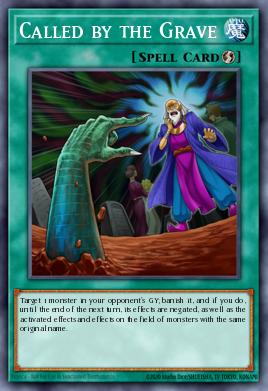
Called by the Grave: one window, two turns of influence
Called by the Grave is a Quick-Play Spell that targets a monster in the opponent’s GY, banishes it, and then negates that card’s effects plus activated effects and on-field effects of monsters with the same original name through the end of the next turn. Its strength is timing and tempo, not a universal answer to every hand trap or a retroactive undo button.
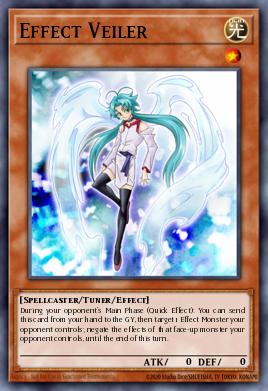
Effect Veiler — One Negate, One Lost Beat, Sometimes an Entire Turn
Effect Veiler does not generate straightforward card advantage by drawing cards or removing a monster. Its strength comes from trading one card in hand for the temporary negation of the right opposing Effect Monster during the opponent's Main Phase. At the correct choke point, that simple 1-for-1 can strip a combo of its starter, extender, search, or bridge and force the opponent to spend additional resources just to keep playing. Veiler is also notable for having no once-per-turn clause in its text and for being a Level 1 LIGHT Spellcaster Tuner, which occasionally gives it material utility. Its limitations are equally important: it only works during the opponent's Main Phase, targets, sends itself from the hand to the GY as cost, and only negates the face-up monster on the field. The real skill is therefore not 'negate the first effect you see,' but identifying which monster is carrying the opponent's future resources.
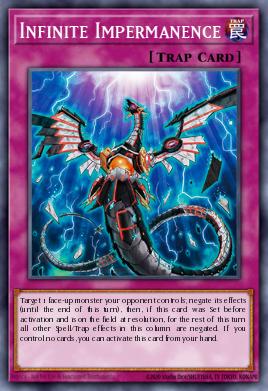
Infinite Impermanence: One Trap, Two Interaction Modes, and an Entire Game of Columns
Infinite Impermanence has two strategic identities. If you control no cards, it can be activated directly from the hand to negate the effects of an opponent's face-up monster until the end of the turn. If it was Set before activation and remains on the field at resolution, it also negates all other Spell/Trap effects in that column for the rest of the turn. That combination of going-second interaction, turn-one disruption, going-first defensive value, and positional pressure makes Infinite Impermanence much deeper than a simple 'negate one monster' card. Its text contains no once-per-turn restriction, so multiple copies can be used in one turn whenever their activation requirements are met. The real skill is not negating any monster with text; it is identifying the true choke point, forcing extenders, preserving other interactions, and understanding when the column clause changes how both players should sequence cards. Usage rates, banlist status, and metagame position can vary by format and date; this analysis focuses primarily on stable mechanical and strategic principles.
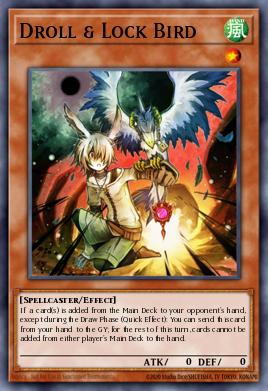
Droll & Lock Bird — One Search, Then the Deck Goes Silent
Droll & Lock Bird is a Level 1 WIND Spellcaster hand trap whose power comes from changing the resource rules of an entire turn. After the opponent adds one or more cards from the Main Deck to the hand outside the Draw Phase, Droll can send itself from the hand to the GY; for the rest of that turn, neither player can add cards from the Main Deck to the hand. It is therefore not a single negate like Ash Blossom & Joyous Spring. Droll allows the first resource to arrive, then tries to turn every later search or Deck-based draw into a dead conversion point. Its strength is highly matchup- and sequencing-dependent. Strong players do not merely ask whether Droll is activatable; they ask how much of the opponent's engine still functions after the first add.
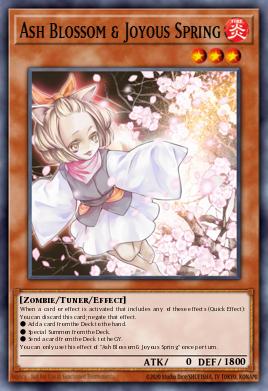
Ash Blossom & Joyous Spring — One Card, Three Resource Axes, and the Question of Timing
Ash Blossom & Joyous Spring is a Level 3 FIRE Zombie Tuner with 0 ATK/1800 DEF, but its real value is its Quick Effect from the hand: discard it to negate an effect that includes adding a card from the Deck to the hand, Special Summoning from the Deck, or sending a card from the Deck to the GY. Ash does not destroy the card and does not negate the activation; it negates that resolving effect. Its strength therefore does not come from firing at the first legal search. It comes from identifying which Deck-access effect is actually the choke point. Strong players will often allow a minor search to resolve so Ash can hit a much larger resource conversion later, or use other interaction first to force the opponent to reveal their real line.

Elemental HERO Stratos — Turning Every Summon Into a Resource Decision
Elemental HERO Stratos is a Level 4 WIND Warrior with 1800 ATK whose value reaches far beyond its stats. Whenever it is Normal or Special Summoned at the proper timing, it chooses between two very different jobs: search any "HERO" monster from the Deck, or destroy Spells/Traps according to the number of other HERO monsters you control. Its real strength is role compression: consistency early in a combo, utility in the middle of a turn, and backrow pressure when going second. Because its text has no once-per-turn restriction, decks capable of Summoning Stratos again can extract multiple effects from the same card. Its optional "When... You can" wording makes sequencing important, however, because certain Special Summon sequences can cause the trigger to miss timing.