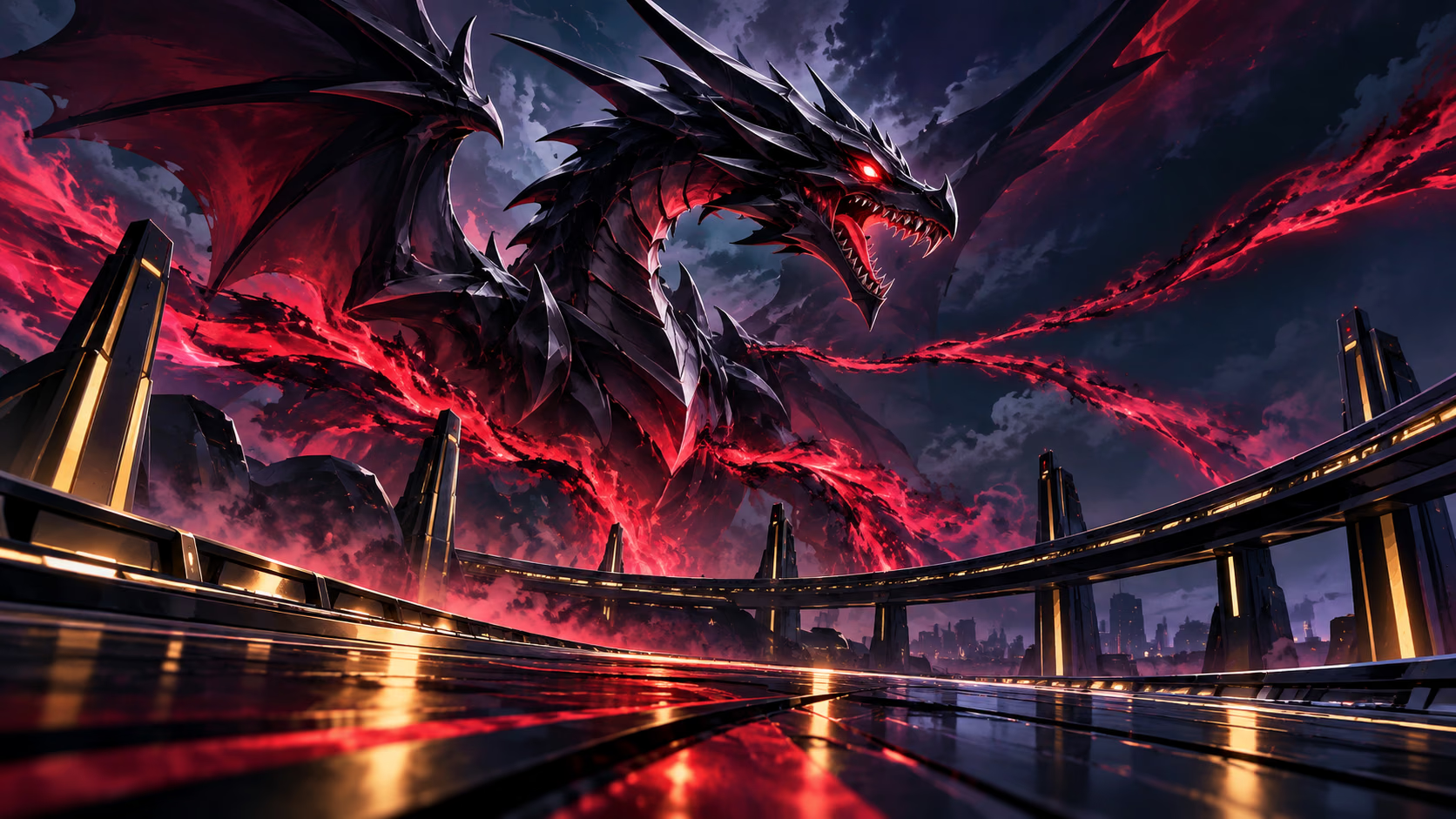
Đấu trường Duel Monsters phong cách Yu-Gi-Oh! 5D’s với mặt sân công nghệ xanh navy, điểm nhấn vàng và không khí đối đầu căng thẳng, gợi những quyết định về vị trí và tài nguyên trong Link Summon.
DuelIndex Editorial

Link Summoning: When zones and resources set the pace

From Link Rating and arrows to climbing, counterplay, and cross-turn decisions

An examination of how Link Summoning converts monsters, makes placement strategically relevant, and enables opponent-turn interaction while separating historical rules from the 2020 revision.

← Articles
Links did more than add another Extra Deck monster type. They introduced new decisions about actual material count, arrow directions, usable zones, and when to turn held resources into pressure. This article separates the summoning rule from individual card effects and limits claims about duel speed to what the mechanics actually establish.

Cards featured in this article

Link Summoning changes how duel tempo is understood

Tempo in Yu-Gi-Oh! is not simply the number of minutes in a turn. It also describes how quickly existing resources become pressure, which options remain available, and when an opponent is forced to respond. Link Summoning converts eligible face-up monsters on the field into an Extra Deck monster without matching Levels as in Xyz Summoning or using a Tuner as in Synchro Summoning. The monsters used as material leave the field, however; the summon itself neither generates a free card nor guarantees that a combo continues. With several Effect Monsters on the field, a player may convert them into a Link Monster with a useful effect or preserve them for defense and future material. The important shift is in resource conversion and interaction windows, not an unsupported claim that every duel becomes shorter or every turn involves more actions.

Mechanic explained

Reading the strategic choice

What should be checked before acting?

  1. 1

    Inputs

    Inputs

    Identify the actual monsters, resources, and field state in the example.

Takeaway: A Link Summon alone does not establish a guaranteed outcome or duel speed.
A real Yu-Gi-Oh! competitive setting where strategic tempo emerges from player decisions and interaction. Photo: Konami, World Championship 2023.

Reading Link Rating and material requirements correctly

Link Monsters belong to the Extra Deck and have a Link Rating and Link Arrows instead of a Level or Rank. An ordinary Link Summon takes place during the Main Phase: eligible face-up monsters meeting the printed material requirement are sent from the field to the Graveyard, and the new monster is placed in a legal zone. An ordinary non-Link monster contributes one to the rating total; a Link Monster used as material can count as one or as its own Link Rating. Two conditions must be met together: the sum must equal the destination's Link Rating exactly, and the number of actual monsters must satisfy the printed material count. Decode Talker is Link-3 and requires 2+ Effect Monsters. One eligible Link-2 counted as two plus one other Effect Monster counted as one gives a total of three using two actual monsters. A lone Link-2 still fails the 2+ requirement even if it can contribute a rating of two. Link Rating is neither Level nor a substitute for physical material count.

Cards mentioned
Mechanic explained

Two separate counts

Can a Link-2 plus one monster make a Link-3?

  1. 1

    Rating

    2 + 1 = 3

    Count the Link-2 as two and the other Effect Monster as one.

Takeaway: Exact rating and actual material count are distinct checks.

Link Arrows make placement a resource

Link Arrows point from a Link Monster toward neighboring zones; a pointed-to zone does not have to be occupied. A monster in a zone pointed to by a Link Monster is linked in that relationship, whereas two Link Monsters are co-linked only when their arrows point directly at one another. Placement therefore becomes part of sequencing. When Code Talker Inverted is Link Summoned, it can Special Summon a Cyberse monster from the hand to a zone it points to, requiring both an available hand resource and a suitable open zone. Decode Talker gains 500 ATK for each monster it points to; when an opponent activates a card or effect targeting a card you control, it can Tribute a monster it points to to negate the activation and destroy that card. Arrows can indicate expansion space, ATK support, or a defensive resource, but an arrow alone does not create a monster.

Cards mentioned
Mechanic explained

Arrows and resources

What does an arrow actually provide?

  1. 1

    Zone

    1 zone

    Find a suitable open zone the arrow points to.

Takeaway: Position and the monster source are separate resources.

From the original New Master Rule to the 2020 revision

Under the New Master Rule introduced alongside Links, Link Arrows opened Main Monster Zones for summoning monsters from the Extra Deck. As a result, placement affected strategies beyond Link-focused decks. That historical restriction must not be copied unchanged into later rules. Under the OCG revision effective April 1, 2020, Fusion, Synchro, and Xyz Monsters Special Summoned from the Extra Deck can be placed directly in Main Monster Zones without an arrow pointing to them. Link Monsters Summoned from the Extra Deck and Pendulum Monsters Summoned from the Extra Deck still need an Extra Monster Zone or a Main Monster Zone pointed to by a Link Arrow. The historical impact on the first three mechanics therefore changed, while zone management remains especially relevant to Link and Extra Deck Pendulum summons. This article does not assign a separate TCG implementation date without corresponding verification.

Mechanic explained

Zones across rule eras

What changed in 2020?

  1. 1

    Before

    New Master Rule

    The original system tied Extra Deck placement to an Extra Monster Zone or an arrow-opened zone.

Takeaway: Check the rule era and monster type before applying zone restrictions.

Link climbing converts resources; it does not mint them

Link climbing uses intermediate Link Monsters alongside other monsters to reach a higher Link Rating. Every stage still needs an exact rating total, enough actual monsters, appropriate material types, and a legal summon zone; a lone Link-2 cannot become Decode Talker. Individual card effects, rather than the summoning rule, may supply the missing resources. On its Link Summon, Code Talker Inverted can move a Cyberse monster from the hand into a zone it points to: that transfers a hand resource to the field rather than creating a card. Transcode Talker can revive a Cyberse Link Monster of Link-3 or lower from the Graveyard to a zone it points to, except itself, with a Cyberse Special Summon restriction during the turn its effect is activated. Without the required hand monster, Graveyard target, receiving zone, or permission under applicable restrictions, the route stops. Card advantage, immediate pressure, and recovery potential must therefore be evaluated separately.

Cards mentioned
Mechanic explained

Where a link sequence gets fuel

Why is rating alone insufficient to continue?

  1. 1

    Hand

    Hand → field

    Code Talker Inverted brings an existing Cyberse monster from hand to a pointed-to zone.

Takeaway: Extenders conditionally move or reuse resources; they do not guarantee every climb.

Two lines from the same resources: climb or preserve?

Consider a model with three eligible face-up Effect Monsters on the field, including one Link-2 meeting the relevant material conditions. All required summon zones are legal, and no other effect supplies extra monsters. In the first line, use the Link-2 and one other Effect Monster to Link Summon Decode Talker: the rating total is three, there are two actual materials, and the third monster remains if unused. In the second line, do not summon again; preserve the Link-2 and the other two monsters as separate bodies with whatever abilities they already possess. This is a conditional decision model, not a fixed combo or an effect guarantee. The first line concentrates resources into a Link-3 destination, while the second retains more bodies without obtaining that destination's effects. If an expected monster-generating effect is stopped, recalculate rating, actual material count, and zones rather than assuming the climb still works. Neither line is universally preferable without considering hand, Graveyard, opposing position, and the goal of the turn.

Cards mentioned
Mechanic explained

Reading the strategic choice

What should be checked before acting?

  1. 1

    Inputs

    Inputs

    Identify the actual monsters, resources, and field state in the example.

Takeaway: A Link Summon alone does not establish a guaranteed outcome or duel speed.

Turning held resources into interaction on the opponent's turn

I:P Masquerena is Link-2 and requires 2 non-Link Monsters. During the opponent's Main Phase, its Quick Effect can perform a Link Summon using monsters you control, including itself. For example, if you control I:P Masquerena and another differently named monster, and the material requirements, exact rating, and summon zone are all satisfied, they can produce Link-3 Knightmare Unicorn. When Link Summoned, Knightmare Unicorn can discard one card to target a card on the field and shuffle it into the Deck; drawing a card requires the separate co-linked condition when the effect is activated. A Link Monster that used I:P Masquerena as material gains protection from destruction by the opponent's card effects. S:P Little Knight offers a different interaction pattern: its on-Link-Summon effect with specified Extra Deck material and its Quick Effect responding to an opponent's activation have distinct conditions, not automatic outcomes of I:P. Keeping monsters across turns can preserve timing choices, but the summon still consumes materials, zones, and applicable costs.

Cards mentioned
Mechanic explained

A decision on the opponent's turn

When can held monsters become removal?

  1. 1

    Timing

    Main Phase

    Use I:P Masquerena's Quick Effect during the opponent's Main Phase when its conditions are met.

Takeaway: Retained materials preserve a timing option, not an exemption from costs and conditions.

Different Link destinations serve different purposes

Decode Talker turns arrow placement into ATK and can Tribute a pointed-to monster to answer an activation targeting a card you control. Knightmare Unicorn exchanges summon materials and a discard for targeting and shuffling a field card into the Deck; its draw depends on being co-linked when the effect is activated. S:P Little Knight can banish a card on the field or in the Graveyard when Link Summoned using a Fusion, Synchro, Xyz, or Link Monster as material, alongside a direct-attack restriction for that turn; its Quick Effect can temporarily banish two face-up monsters under the condition tied to an opponent's activation. Accesscode Talker is Link-4 requiring 2+ Effect Monsters; on Link Summon it can gain ATK based on the Link Rating of a Link Monster used as material, then can banish Link Monsters from the field or Graveyard to destroy opposing cards subject to its Attribute restriction. These are distinct examples of defense, removal, interaction, and offensive pressure, not a power ranking or a statement about forbidden-list status.

Cards mentioned
Mechanic explained

Reading the strategic choice

What should be checked before acting?

  1. 1

    Inputs

    Inputs

    Identify the actual monsters, resources, and field state in the example.

Takeaway: A Link Summon alone does not establish a guaranteed outcome or duel speed.

Breaking points and the limits of claims about speed

A Link sequence can be interrupted before enough material appears, at an effect that summons another monster, or when an intermediate Link Monster is removed. If Code Talker Inverted does not place a Cyberse monster from hand into its pointed-to zone, that missing body cannot be assumed in the next step. If a Link Monster providing a needed arrow leaves the field, check the legal zone again for the next Link Monster Summoned from the Extra Deck; having enough rating is not enough to determine placement. Cyberse-only Special Summon restrictions, different-name requirements, Graveyard state, and hand resources can invalidate the remaining route. Counterplay consequently targets concrete conditions rather than assuming that destroying any Link guarantees victory. Link mechanics broaden resource conversion and interaction across turns, but no representative dataset here establishes that the mechanic alone shortens or lengthens turns or duels, or makes every deck use Links. Design motives, a separate TCG rollout date, and community sentiment cannot be inferred from the rules.

Cards mentioned
Mechanic explained

Reading the strategic choice

What should be checked before acting?

  1. 1

    Inputs

    Inputs

    Identify the actual monsters, resources, and field state in the example.

Takeaway: A Link Summon alone does not establish a guaranteed outcome or duel speed.

Key Takeaways

  • A Link Summon converts existing field monsters into an Extra Deck option; it does not inherently generate card advantage.
  • Exact Link Rating and actual monster count are independent checks.
  • Link Arrows and co-linking make placement matter to development and interaction.
  • The April 1, 2020 OCG revision relaxed Fusion, Synchro, and Xyz placement without removing Extra Deck Link/Pendulum zone restrictions.
  • I:P Masquerena and different Link destinations illustrate how held resources can become interaction on the opponent’s turn.

Frequently asked questions

Can a lone Link-2 make a Link-3 requiring 2+ monsters?

No. Its Link Rating may count as two, but it remains one actual material; both the exact total and the printed material requirement must be met.

Is co-linked the same as simply occupying a pointed-to zone?

No. Co-linked requires two Link Monsters to point directly at each other; a pointed-to zone may be empty or occupied by a non-Link monster.

Do Fusion, Synchro, and Xyz still always need a Link Arrow to enter a Main Monster Zone?

Not under the April 1, 2020 OCG revision: they can enter Main Monster Zones directly from the Extra Deck, while Link and Extra Deck Pendulum summons still require legal zones.

Does I:P Masquerena make Knightmare Unicorn free?

No. You still need legal materials, exact rating, and a valid zone; Knightmare Unicorn requires a discard for its targeted shuffle, while its draw has a separate co-linked condition.

Links change tempo by adding conversion routes and timing options for monsters already available, but each route depends on materials, legal zones, individual card text, and an opponent’s response. Evaluate pressure, options, and remaining resources rather than assuming Links make every duel faster.
MIND MAP

Link Summoning: a map of tempo

Mechanics, zones, conversions, and interaction windows.

Choose a branch to explore; use +/− to collapse or expand.

Selected branch

Link and tempo

Converts field monsters into Extra Deck options without inherent card advantage.

QUIZ

Check your Link knowledge

Question 1/6

Six questions about conditions, zones, resource conversion, and timing.

Which condition is met by using a Link-2 and another Effect Monster for Decode Talker?

Explore next

Find connected cards and decks in DuelIndex.

DUELINDEX · EDITORIAL

Read next